
CHRISTCHURCH - New Zealand student and university clubs are preparing two Web3 hackathons under the volunteer-run Web3NZ organization.
The University of Auckland Web3 Club will lead the Auckland event while the University of Canterbury Crypto Society DAO organizes Christchurch.
Sign-ups are open at https://web3nz.xyz/.
Auckland event – WEB3UOA Hackathon 2026
- Sign-ups: https://web3nz.xyz/auckland
- Dates: April 25–26 2026
- Location: GridAKL, Wynyard Quarter, Auckland
- Lead organizer: University of Auckland Web3 Club (under Web3NZ)
- Format: 48-hour build sprint with team formation, mentoring and pitching
- Prize pool: More than $5,000 plus additional sponsor bounties
- Open to: Students, developers, designers and beginners
Christchurch event – WEB3HACK.NZ 2026
- Dates: July 24–26 2026
- Location: University of Canterbury Engineering Core
- Lead organizer: University of Canterbury Crypto Society DAO (under Web3NZ)
- Format: Three-day event with 48 hours of focused building
- Prize pool: Contributes to total series prizes exceeding $10,000
- Open to: Students, developers, designers and beginners
Both build on last year’s inaugural national hackathon and reflect Web3NZ’s full shift to a community-driven volunteer model after the Ministry of Innovation handed it over in 2025.
Last year’s event at the University of Auckland drew more than 140 participants who formed 24 teams and developed projects over 48 hours.
It offered a $30,000 prize pool and focused on sponsor-defined challenges that included decentralized finance tools, conservation applications and public sector solutions such as government expenditure tracking.
The upcoming events mark the second and third major Web3 hackathons held in New Zealand. They aim to give participants a practical space to engage with blockchain at a time when the sector still faces mixed public sentiment.

Participants at hackathons decide what they want to build, while sponsors award prizes to encourage contenders to build projects around their product or technology.
Next generation of Web3 builders in focus
Chris Kwon, founding president of the University of Auckland Web3 Club and an active participant in international ETHGlobal hackathons, said the primary goal of the events was education and access.
“Globally, innovation in emerging tech is accelerating rapidly" Kwon said.
"These hackathons are about ensuring New Zealand students are not left behind but instead are empowered to explore, build and ultimately shape the future of our tech ecosystem."
“While areas like blockchain often carry lingering negative sentiment, we believe that as one of the leading student-led initiatives in this space in New Zealand, we have a responsibility to help reshape that perception by fostering education, experimentation and open discussion.”
FireEyes DAO core contributor and Axia Labs founder James Waugh said the events created a rare footing for New Zealand developers to connect with a rapidly growing global industry.
“New Zealand’s tech scene has underperformed over the past decade and introducing these Web3NZ hackathons is a fantastic way for NZ developers to get exposure to the global crypto industry.”
He pointed to potential longer-term benefits.
“Participating in global hackathons has shown me the opportunity that a hackathon can provide both to developers and sponsors” Waugh said.
“Seeing a team build something brand new on top of a crypto protocol and then sponsor teams embrace these hackers to join the team, receive investment or even integrate the hack into their tech stack.”
Oliver Jenks, co-CEO of the University of Canterbury Crypto Society alongside Kodi Sinclair, said the Christchurch event would be the largest Web3-related gathering on the university campus to date.
“The Web3NZ hackathon initiative is a fantastic way to bring in fresh eyes from many different disciplines to Web3 technology” Jenks said.
Kodi Sinclair, also co-CEO of the University of Canterbury Crypto Society, said the hackathons brought students, entrepreneurs and innovators together in a practical setting.
“These hackathons are an opportunity for web3-natives to show their skills while also introducing traditional developers to a potential new passion and expanding their understanding of where development could take them.”
“This cross-over is what helps grow the backbone of Web3 within NZ.”
Jayden Hunt, CTO of Cryptocurrency NZ, said the events acted as a pipeline for the local tech scene.
“Every one of these events converts a handful of curious developers into genuine Web3 builders” Hunt said.
“Over the next year, as more of these events run across NZ, you’ll start seeing the projects that come out of them mature into real products and startups.”

Some of last year's judges: Nawaz Ahmed of GD1, and Callum and James from 🔥_🔥
Christchurch's genesis hackathon
Jenks said the Christchurch organizing team was focused on maximum impact.
“Between Web3NZ and UC Cryptocurrency Society, we’ve got a very talented and passionate team dedicated to maximising the impact and value of this event” he said.
Sinclair highlighted the energy that defined hackathon culture.
“The best part about the hackathon is the chaotic all nighters, the rapid-fire problem solving and the energy in the room as everyone frantically builds and innovates” Sinclair said.
“That environment is where some of the most exciting ideas are born.”
Hunt said the real value often emerged in unexpected moments.
“My favourite part of hackathons is the feeling of watching the moment people unlock new understanding of ideas and technical concepts and surprise themselves” Hunt said.
“The 2am breakthroughs, the chaos and the laughs are the parts that keeps me coming back.”

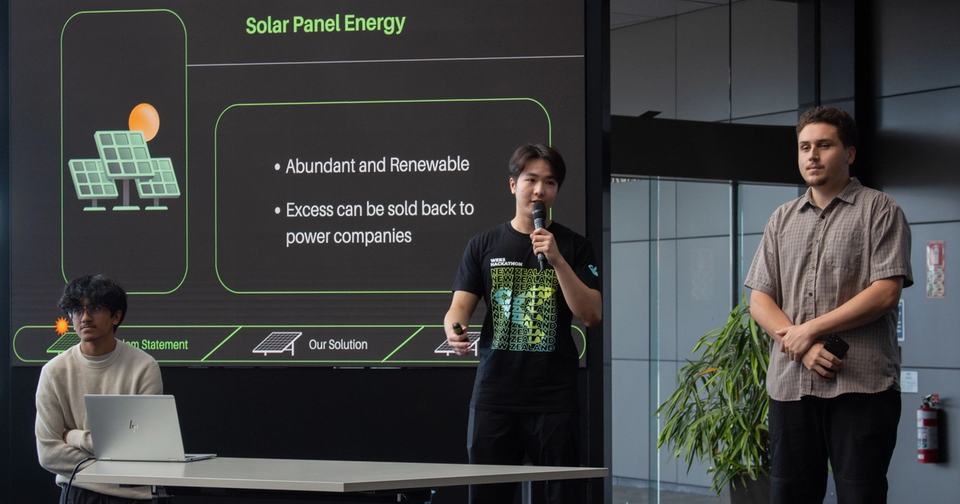
Jayden Hunt and the University of Canterbury team presenting to judges after 2 hours of sleep.
Kiwis compete on the global stage
James Scaur, a New Zealand developer who has placed highly in multiple international Bitcoin hackathons, said the format offered freedoms rarely found in regular development roles.
“The best part is the freedom you get compared to paid dev work” Scaur said.
“No customers to serve, no compliance requirements to fulfill, no need to control costs or make it scale, just build whatever you can in a short space of time.”
Scaur has placed highly in several international Bitcoin and Web3 hackathons, including second place at PlebFi Miami, top-eight finalist at ETHGlobal Buenos Aires, third place at Bitcoin++ Berlin, second place at Baltic Honeybadger, and first place at Bitcoin++ Floripa.
He described hackathon culture as generally friendly and focused on learning rather than prize-chasing.
“Usually very friendly, at least the bitcoin ones” Scaur said.
“A hackathon is ideally a thing where students and newbies come together and learn as well as established devs taking a break from the seriousness of their day jobs - experimenting and learning new things.”
Lower cash prizes tended to produce better atmospheres because participants were “in it for the love of the game” he added.