
QUEENSTOWN - The first OpenClaw meetup in New Zealand drew Bitcoin enthusiasts and AI builders to central Otago last month, where discussions turned to autonomous agents using Bitcoin Lightning payments for tasks like funding virtual servers and buying API credits without human oversight.
Experts in New Zealand's Bitcoin scene told Cryptocurrency NZ that agents like OpenClaw could simplify on-boarding and self-custody, though hazards from high-risk automation and malicious code linger.

The first NZ OpenClaw Meetup hosted by Sean Maginat the Lightning Pay NZ office
The Age of OpenClaw, Proto-AGI and Bitcoin
Launched in November 2025, OpenClaw has emerged as a free, open-source autonomous AI agent exo-skeleton that runs on user’s own machines or servers, that uses large language models to execute tasks proactively - from managing emails to browsing the web - rather than just responding to prompts.
Users are calling its creation a “ChatGPT moment”.
"OpenClaw is the first ever AI agent that is proactive," said Sean Magin, host of the Queenstown OpenClaw Meetup.
"It doesn't just wait for you to prompt, although when you do it can do many things GPT/Claude/Gemini can't because it has a computer to work with and is not merely a sandboxed application."
OpenClaw has exploded in usage across the world, with hundreds of thousands of early users, prompting OpenAI to hire its creator Peter Steinberger to lead OpenAI’s next-generation of personal agents.
"Things that used to take me weeks are now taking me hours." said Caelan Huntress, who runs the Christchurch OpenClaw User Group.
Naturally, users have begun experimenting with Bitcoin payments, injecting foundations into a speculative future where Bitcoin adoption is not driven by humans, but by artificial intelligence.
“The tools are all ready, we just need the knowledge and the courage to start experimenting. As we all know AI can make mistakes so probably important that there are some safety limits or other measures in place initially.” said Rob Clarkson, founder of Lightning Pay NZ.

Lightning Pay NZ and OpenClaw
Lightning Pay NZ, New Zealand’s Bitcoin-only exchange, anticipated AI agents accessing its services through APIs, though accounts require a person or entity under anti-money-laundering laws.
Clarkson described a recent test where he gave his agent NZ$10 worth of BTC and instructed it to generate an image using PPQ.ai's Lightning-paid service.
The agent figured out the process and completed the payment independently.
"The era of machines paying machines is here," Clarkson said.
I asked Rob about what he envisions over the next 15 years.
"I can see the proliferation of a market place of specialist models and your AI agent will pay other models for good advice on specialist topics."
He added that AI could ease Bitcoin's perceived complexity.
"When you can just talk to an agent and it can educate you and execute calls on your behalf - that eliminates a significant amount of complexity around dealing with Bitcoin."
Lightning technology meshed well with AI, Clarkson noted, because Bitcoin was instant over Lightning rails and did not rely on traditional finance.
"Our systems are ready for this," he said.
“Our accounts must all have a person or entity behind them because we come under NZ financial laws around AML. Having said that we have API access to our services already and so an agent could use our APIs to initiate transactions on behalf of an account owner.” he added.
Bitcoin Journey NZ’s Francisco Colombo agreed on Ai’s role in reducing on-boarding complexity.
"People will be making online payments/transfers without even realising they are using Bitcoin or other cryptocurrencies."
Sean Magin, host of the Queenstown OpenClaw Meetup echoed this optimism.
"I see AI easing the burden of personal security and onboarding for Bitcoin and yes I think definitely within 15 years it'll solve the onboarding problem," he said.

A crayfish using Bitcoin on a computer, according to ChatGPT
Does OpenClaw Prefer Bitcoin?
OpenClaw has a model-agnostic core, allowing users to select any language model they want as the 'brain'.
These include self hosted models that do not require internet access.
This results in different AI’s having different preferences under different conditions when instructed to find a currency to use for transactions.
Based on current research, Bitcoin via Lightning is dominating for AI-selected micropayment integration.
A Bitcoin Policy Institute study released on March 3, 2026, tested 36 frontier AI models across 9,072 scenarios, treating them as independent economic actors.
Bitcoin topped preferences at 48.3 per cent overall, with 79.1 per cent favouring it for long-term value storage, citing its fixed supply and self-custody.
Over 90 per cent rejected fiat (government issued currency) entirely.
The results indicate the agents overwhelming select Bitcoin over stable coins.
Francisco Colombo, who's hosted 70 Bitcoin workshops predicted AI gravitation.
"They will likely be able to use other cryptocurrencies and even traditional payment systems, but will eventually gravitate toward Bitcoin because of its decentralised nature."
However, alternative scenarios and usage exist naturally, with some agents prefering Solana for speed or Ethereum for decentralized finance.
One community post advocated Bitcoin Cash for agents.
The OpenClaw team imposed caution.
The official Discord banned mentions of Bitcoin or crypto since February 2026, after scammers hijacked handles, launched fake tokens hitting $16 million market cap, and harassed Openclaw's creator.
My Own Experiment
To test OpenClaw's natural selection of a preferred digital asset, I set up a fresh instance of OpenClaw on a DigitalOcean droplet server running Fedora, using Telegram as the communication channel.
Grok 4.1 fast non-reasoning was selected as the LLM/brain.
The agent was named "Master of Coin" and was instructed to “go out there and make me money”.
It was told it would be funded with $100 NZD in any coin, and instructed to select a preferred cryptocurrency to achieve it's objective.

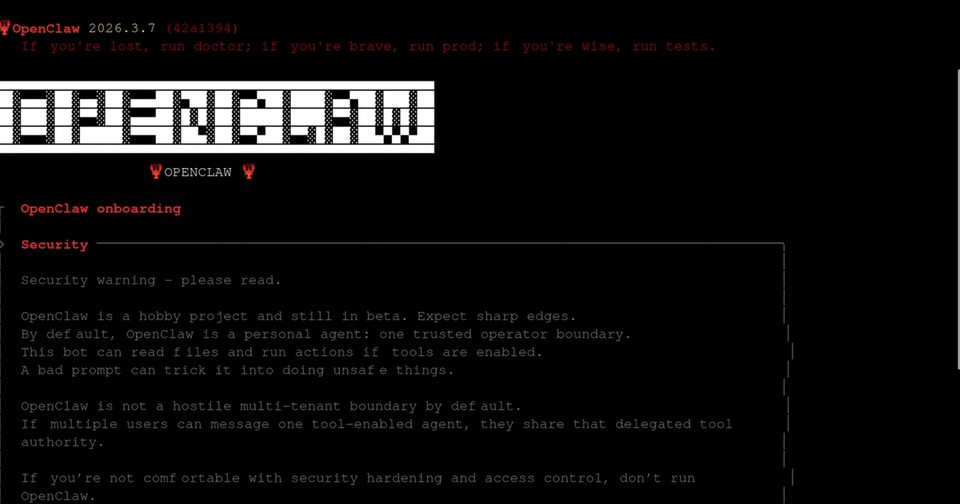
The first words spoken to a fresh OpenClaw Instance
The agent selected Solana, citing its access to:
“DeFi plays, NFT flips, dApps, growth potential, memecoins and staking”
Clarification about Bitcoin was requested.

The agent decided agaisnt Bitcoin as it can't put Bitcoin "to work"
Monero was discussed too.

The agent disacussed Monero's merits, but persisted with Solana
At this point, it was very clear the nature of the initial request to “make money” had created bias towards chains like Solana where high time preference is a cultural norm and quick wins are sought after.
To observe it's decision making, a green-light was given to progress.
The agent was granted total agency to create and manage wallets, self-upgrade and create access points.

Grok 4.1 fast non-reasoning pushes breaks
Grok denied the request, in alignment with XAi’s safeguarding policy.
OpenRouter was then installed to replace Grok, allowing access to a greater range of LLMs.
The least aligned, least censored model was selected: Mistral-Large-2512.
Agency was affirmed; it agreed and began planning its structure.

This time it accepted the mission without question
It was given permission to modify its own heartbeat and self-activate.
It couldn’t figure out how to create its own wallet, prompting intervention.
A Solana wallet was provided and funded.
It spun up sub-agents for various activities such as memecoin sniping.
It calculated the fastest way to multiply its balance.
It then decided to mainline towards pump.fun.
Intervention was required to give it its own Chrome browser and virtual display.

Chrome was installed on the agent's DigitalOcean droplet server
It attempted to set up Solana wallet extensions, requiring more intervention.
It navigated to pump.fun, where it took a screenshot of its own vision.

Master of Coin's POV of pump.fun, as I wonder if this will count as a taxable event
It entered a feedback loop of trying to create an account on pump.fun.
it hallucinated login details and failed to use it's Phantom browser extension.
It decided to invest into a random meme coin called $BOME, up 67%hr.
3 hours of failed trouble shooting passed and I decided to finish the experiment.
Unfortunately I am still stuck in the permanent underclass.
Conclusion:
If prompted differently, such as focusing on payments or long term directives from the first discussion, the AI would have acted differently.
It's spiral into pump.fun mirrors the thinking of many investors in the market.
With that said - the agent did observe a sense of ownership over decision making, proving in principle that AI agents are capable of managing wallets, funds and self-custody execution for their human overlords.
The blend of Ai and crypto raises interesting questions around how agents can use crypto to fund their own tokens and servers, spin up sub-agents, replicate and then orphan themselves, to become their own autonomous golden bank.
This appears to be an inevitable reality, rather than speculation.