NZ P2P Crypto Marketplace bans bank transfers - shifts to cash only to combat scams
The community-driven server, active since 2021, now mandates face-to-face (F2F) NZD cash trades in listing channels for its 3,500 members, with any deviations resulting in a no-warning ban.


November 5, 2025 - The New Zealand P2P Crypto Marketplace, a Discord server where thousands of Kiwis exchange Bitcoin, Monero and other digital assets person-to-person (P2P), has voted to ban bank transfers in a bid to eradicate rampant fraud.
The community-driven server, active since 2021, now mandates face-to-face (F2F) NZD cash trades in listing channels for its 3,500 members, with any deviations resulting in a no-warning ban.
This latest rule, approved by an 81% consensus poll, builds on a year of progressive enhancements to fortify against increasingly sophisticated scams.
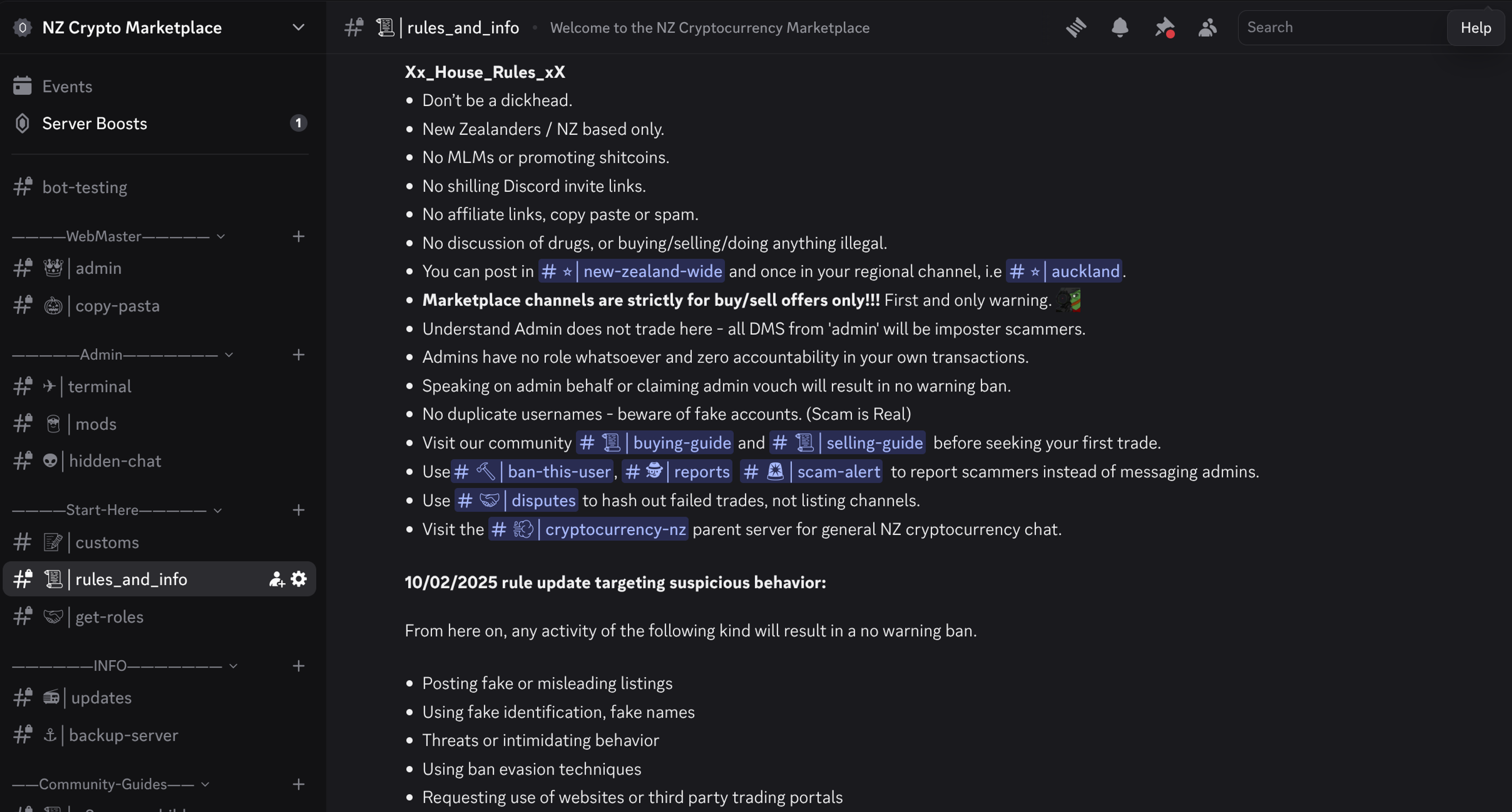
The server rules, before the recent bank transfer listing ban
"Bank transfers are responsible for 99% of scams on this server” one member stated. "They are the main exploit of foreign scammers buying or stealing IDs, opening bank accounts, then executing scams here."
"With ai these days, it's nearly impossible to do any kind of impromptu KYC. More likely to be scammed (or have your bank accounts frozen as an innocent part of a scam) than being robbed in a public place doing a cash trade."
Cases of young or desperate people, in pursuit of easy money, selling their New Zealand identification information on gig work websites have been reported, where foreign buyers open bank accounts in their name within the country.
Those bank accounts are then used for fraudulent activities, allowing scammers to operate outside of New Zealand with local credentials.
Bank account reversal scams are also increasingly common, a feature of NZ’s banking system where transactions can be reversed before settlement. Combined with immutable crypto transactions, this creates an imbalance: Sellers receive NZD, send crypto, then face reversals, losing both.
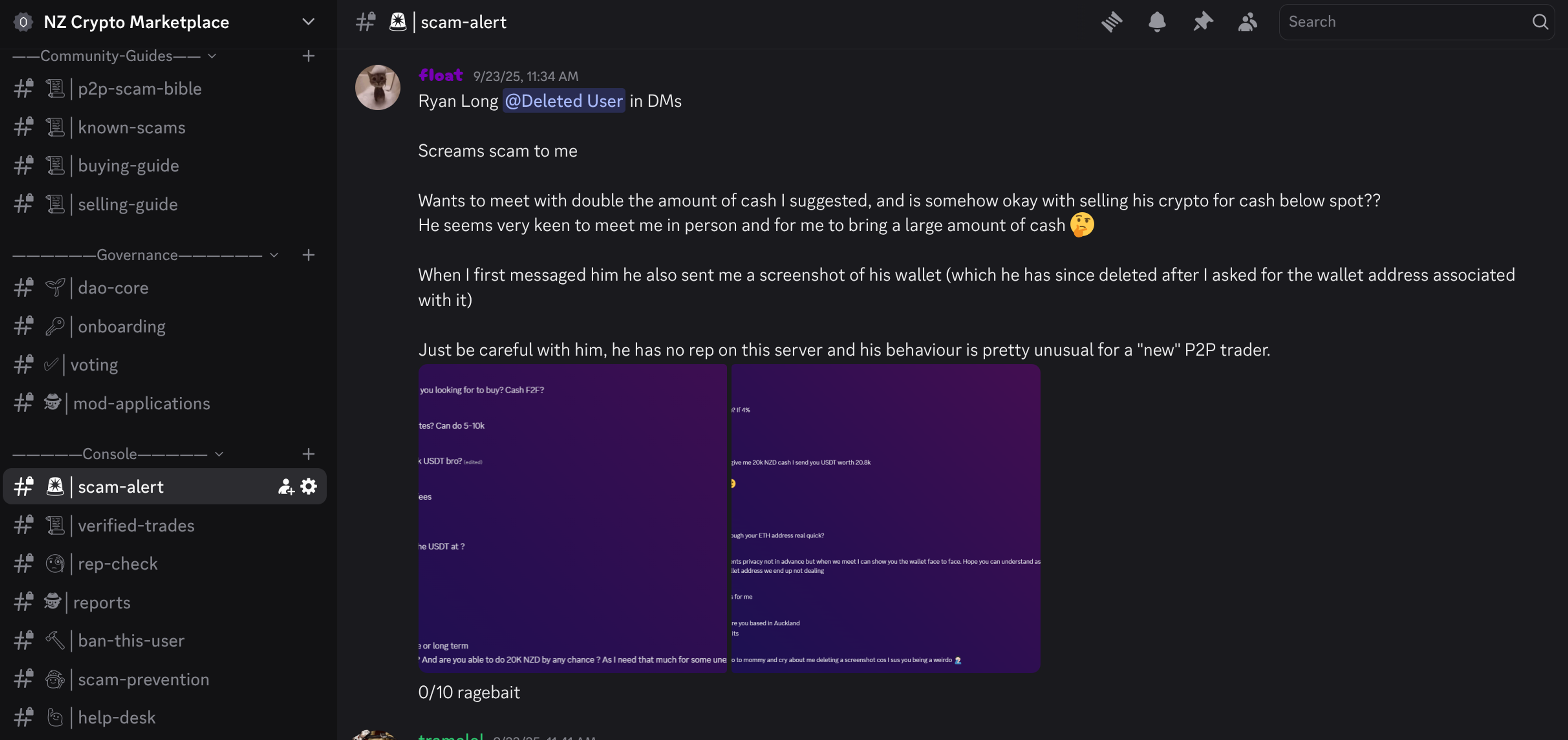
The #scam-alert channel where members publicly vet suspect activity of other traders
Scammers frequently pose as admins, bombarding hundreds of members via direct messages setting up fake trades, threatening a ban if the buyer or seller does not send first - resulting in hundreds of thousands in losses.
Some traders build credibility through repeated small deals to farm reputation, only to disappear with substantial funds in exit scams, exploiting the reputation system meant to protect community members.
The marketplace stepped in after LocalBitcoins shuttered in 2023, aiming to fill NZ’s P2P trading gap, but has drawn little direct media attention, typically lumped in as "Discord-based" in scam reports.
Yet, it has been linked to several high-profile scams, including physical confrontations like aggravated robberies in Wellington car parks during cash meets, where fake guns were wielded to intimidate victims.
The server's vote to ban bank transfers underscores the persistent risks in P2P trading, driven by a pursuit of privacy, control and lucrative selling fees (3-8%) that often exposes members to new vulnerabilities.
By fleeing traceable bank methods to curb scams, server members ironically heighten exposure to physical threats like wrench attacks or muggings during cash meets - realities amplified in a scene where an estimated 30% of trades were already cash-based, per community logs.
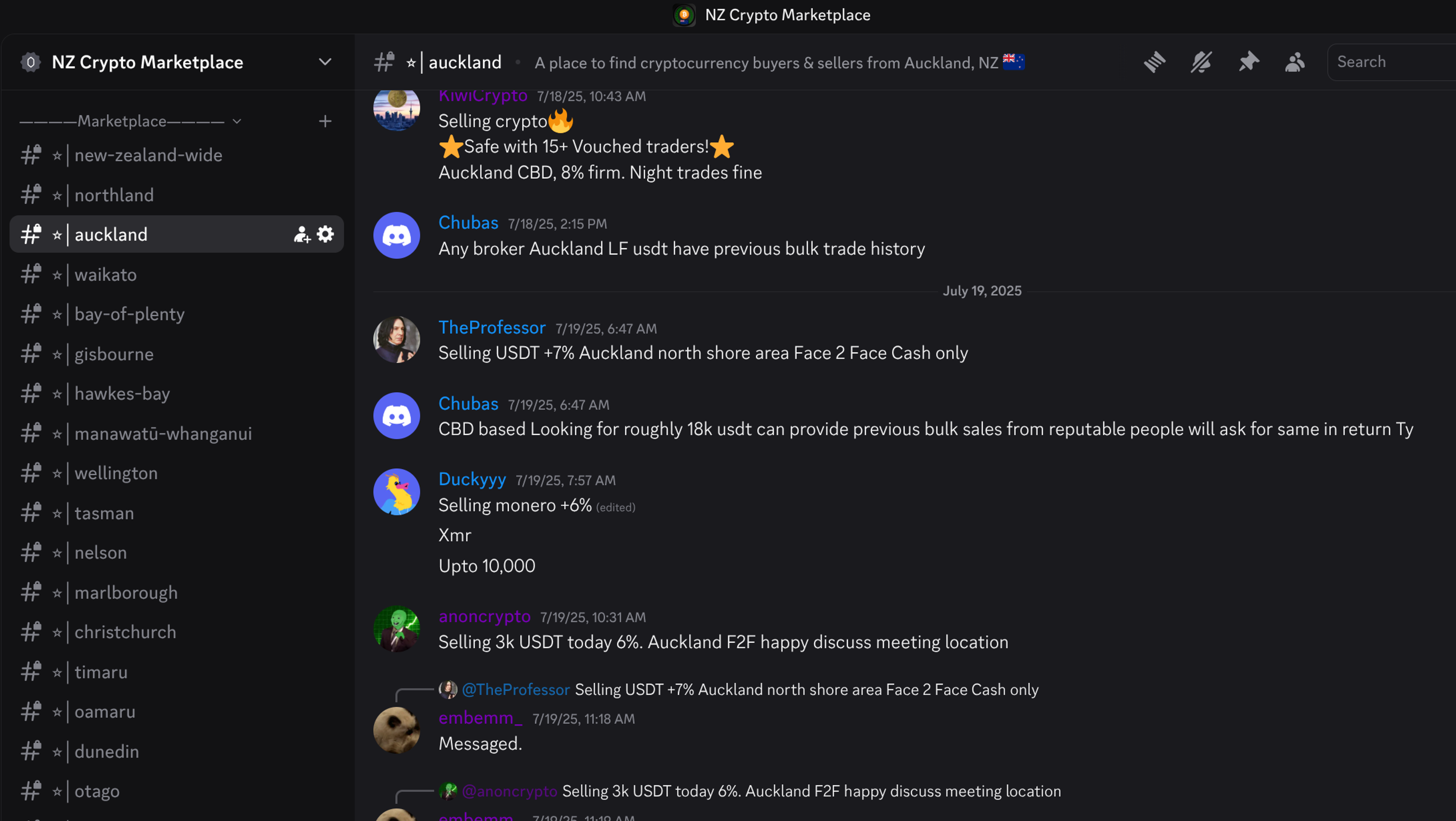
Listings on the #auckland regional channel
Critics, including regulatory voices, argue such servers concentrate vulnerabilities without robust safeguards, potentially enabling fraud clusters despite intent, whereas P2P traders contend that the decentralized setup builds collective resilience through shared intel, experience and reputation dynamics.
It's estimated P2P traders orbiting the server have inter-traded dozens of millions since it's establishment, with hundreds of thousands in scam losses.
Despite the issues, the server log reports over 1,500 completed trades since 2021, reflecting trader persistence in a high-risk, unregulated economy focused on direct P2P exchanges rather than speculation - where users list everything from cars and electronics to services like graphic design or mining rigs.
Disclosure: As creator and admin of this server, I proposed the rule change. As I shift focus to journalism, this piece documents NZ's underground crypto culture, which nobody else covers, so I figured I'd document it for the reader.