Who gets the crypto vote? We asked all 17 parties where they stand
Cryptocurrency NZ went through 12 years of Hansard, candidate interviews, public statements and every party's reply to find where all 17 parties stand on Bitcoin and the digital asset economy before the 7 November election.


Blockchain is coming at us like there's no tomorrow.
In October, Cryptocurrency NZ put two questions to every registered party: whether it had a crypto policy, and if not, its position on the digital economy.
Only one party answered with a policy.
A National MP couldn't pre-announce it, but said "hopefully, there's going to be one".
A Labour MP has told Parliament more New Zealanders reported investing in crypto than owning investment property, citing an Easy Crypto survey.
A Green MP has called himself the party's "resident crypto bro".
It matters to a lot of voters.
Inland Revenue has identified 355,000 unique crypto-asset users in New Zealand, who between them have made 57 million transactions worth $36 billion.
Some candidates have also answered on camera.
Nell Hunter of The Bitcoin Basin asked ACT's Todd Stephenson, Opportunity's Bianca Beebe, NZ First's Jason Herrick, Labour's Peter McDonald and National's Joseph Mooney where they stand on Bitcoin, in a five-part series on X in October. All five are standing in Southland, where Mooney is the sitting MP.
ACT: the only plan on paper
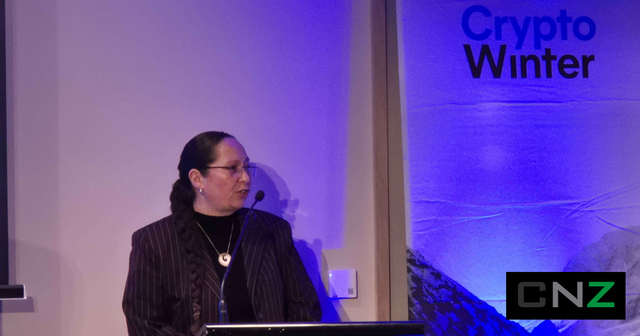
ACT deputy leader Nicole McKee launched "Unlocking New Zealand's Digital Economy" at CryptoWinter26 in Queenstown on 27 August.
The policy would stop taxing gains on digital assets held longer than 12 months.
The rest of the six-point plan includes a tax exemption for low-value crypto transactions, legal frameworks for tokenised assets and stablecoins, a sandbox for financial innovation and a review of banking access for crypto businesses.
The 12-month rule would not apply retrospectively, as CNZ reported on Monday.
McKee told CNZ it would apply from the day the law takes effect.
"The new rule would not automatically reopen or cancel tax liabilities arising from disposals made in previous income years," she said.
Asked whether swapping one crypto for another would restart the 12-month clock, ACT said: "The policy's specific details remain to be developed and will be informed by further advice."
McKee told RNZ the changes would give everyday investors "certainty and simplicity".
"Inland Revenue should focus on significant taxable activity, not trivial transactions that create more paperwork than revenue," she said.
ACT leader David Seymour told Newstalk ZB in August the rest of the world was embracing crypto and New Zealand needed to adapt to new technology.
"I want our country not to be a backwater, but the frontier for a free world," Seymour said.
"ACT wants New Zealand to be an early and intelligent adopter rather than a reluctant follower," McKee said at the launch.
On banking access, McKee said: "Legitimate businesses should be assessed on what they actually do and how they manage those risks, rather than being rejected simply because their business involves blockchain, cryptocurrency or digital assets."
At the Bitkiwi XVII event in Wellington on 24 October, McKee said ACT would give one minister responsibility for digital economy work now spread across five agencies.
ACT's release from the event took aim at the other parties.
"Where other parties see cryptocurrency and the digital economy as an opportunity to over-regulate, restrict and tax, ACT sees an opportunity for New Zealand to innovate, compete and prosper," it said.
It also said ACT was "the only party offering tax relief to the 355,000 New Zealanders with personal exposure to cryptocurrency".
Its Southland candidate Todd Stephenson said the same to Hunter.
"We're actually the only political party to have a very specific policy around cryptocurrencies, which obviously includes Bitcoin," he said.
He said ACT's caucus took it very seriously and thought it was the right time for policy.
ACT's original policy document, released in August, never named Bitcoin directly. The only mention of crypto called it "a speculative crypto asset", to set stablecoins apart from it.
National: no policy yet, but one may be coming
National's answer came from Harrison Lahman of the National Leader's Office.
"We want New Zealand to welcome new technologies while maintaining sensible safeguards to protect consumers and prevent criminal misuse," it said.
Rather than a policy, National pointed to the government's record.
"We've rejected a blanket ban on crypto ATMs in favour of a more targeted approach," its reply said.
That decision was announced by ACT's McKee as Associate Justice Minister in July, when Cabinet dropped a planned blanket ban in favour of powers to set transaction limits.
National also pointed to a tax bill introduced by Simon Watts in September. According to Inland Revenue's commentary on the bill, it would exempt gains on qualifying stablecoins and change how crypto lending is taxed, both from 1 April 2027.
Introducing it in Parliament on 15 September, Watts said it included measures on the taxation of crypto assets.
"To remain fit for purpose, the tax system needs to adapt to new technologies," he said.
Watts has spoken about who holds crypto before. Introducing rules in August 2024 for New Zealand to swap crypto tax information with other countries, he told Parliament between 6 and 10 per cent of New Zealanders owned some crypto, mostly traded through offshore exchanges.
National also pointed to the Financial Markets Authority's regulatory sandbox and its work with the Ministry of Business, Innovation and Employment on rules for virtual assets.
Its focus, it said, was "proportionate and practical regulation that supports emerging technologies, protects consumers, and avoids unnecessary barriers".
A National minister has been more openly enthusiastic. In February 2025, Andrew Bayly, speaking as Commerce and Consumer Affairs Minister, told a Financial Services Council conference New Zealand should embrace crypto, interest.co.nz reported.
"Cryptocurrency is obviously here to stay," Bayly said.
He said the real opportunity was "New Zealand being a trading platform".
In the August 2024 debate where Watts spoke, National MP Stuart Smith told Parliament he had hosted Binance, the world's largest crypto exchange, at Parliament that week.
"Cryptocurrency is going to play an important part in the global economy at some point over time," he said.
"I think that a misconception about cryptocurrencies is that it's the place for illegal transactions, and so on," he said.
Not every National MP is a fan. Speaking on the Criminal Activity Intervention Legislation Bill in March 2023, Chris Penk said he was glad it made no reference to cryptocurrency. He said he would hate to think a select committee could invite "crypto bros" to submit and "express their undying devotion and fandom of those things".
"I get tired of hearing about it even on twitter.com, and that's quite enough for me," he said.
Its Southland MP Joseph Mooney, who hosted a Bitcoin session for more than 20 MPs at Parliament in June 2025, went further. He told Hunter he was still pushing for a National policy, with fellow MP Ryan Hamilton.
He said the session led to further meetings he helped organise in Wellington, to which he invited ACT and other parties.
He said ACT had picked up that work and got a policy across the line, and that understanding had shifted in some parties, though not all.
Labour
Labour did not answer.
The office of its economic development and technology spokesperson Reuben Davidson said it had forwarded the questions to him. Nothing came back by the deadline.
Yet in the public Hansard records CNZ went through, Labour MPs spoke about crypto on more sitting days than MPs from any other party.
What they have said is mixed.
In government, Labour exempted crypto from GST. Revenue Minister David Parker told Parliament in 2021 the aim was that people using crypto to invest or raise capital "are not obstructed from doing so because of our GST rules".
During that bill's debate, Labour MP Barbara Edmonds cited an Easy Crypto survey that found around 18.4 per cent of adult New Zealanders reported investing in cryptocurrency, compared with 17.7 per cent who reported having investment property.
In opposition, Labour MP Deborah Russell questioned the crypto reporting rules in March 2025. She asked what the Minister had done about the risk of New Zealanders' crypto information, once with the US tax authority, being shared beyond it.
In July 2025, when McKee was considering compensating owners of crypto ATMs she then planned to ban, Labour regulations spokesman Duncan Webb told the NZ Herald: "I'm gobsmacked that in a cost-of-living crisis, they are considering compensating crypto traders."
McKee told Parliament that month she was still awaiting advice on compensation.
Davidson, whose office forwarded CNZ's questions, has raised crypto in Parliament as a scam risk. In July 2025 he told the House a Taranaki grandmother had lost close to a quarter of a million dollars after a deepfake video of Prime Minister Christopher Luxon.
In June, Labour general secretary Rob Salmond told CNZ the party had no plans to accept crypto donations.
Labour's Southland candidate Peter McDonald told Hunter Bitcoin did not come up in conversations, after asking whether Bitcoiners drive Lamborghinis.
"I don't really know anything about it," he said.
He said he understood the idea of bypassing the banking system. Asked whether he was a Bitcoiner, he said: "I think I may have missed that boat."
Greens
The Greens did not answer either.
In June, a Green Party spokesperson told CNZ the party took donations only in NZD.
"We value a transparent political donations system where the source of donations is clear," the spokesperson said.
Mooney told Hunter only one person from the Green Party came to the meetings on Bitcoin he helped organize for MPs.
The Greens have backed the crypto reporting rules. Co-leader Chlöe Swarbrick told Parliament in March 2025 the party supported "incorporating the crypto-asset reporting framework" in a tax bill, but could not support the bill in its entirety because of the government's tax cuts.
Green MP Francisco Hernandez said the "crypto bro" line in May 2025, while asking what technology the Ministry of Social Development uses for automated decisions.
Opportunity
The Opportunity Party is not in Parliament, but the latest Taxpayers' Union-Curia poll, taken from 28 October to 3 November, put it on 5.8 per cent, enough for seven seats. On those numbers, the current coalition and a left bloc including Opportunity would each have 60 seats.
Its leader Qiulae Wong sought feedback on a crypto position at NZ Crypto Con in June.
The Opportunity Party said as a small party outside government it did not have the capacity to develop policy in every area before the election. It pointed to its Digital Future policy instead.
"We invite further discussion on specifics and implementation when we know what role we will play in the next Parliamentary term," the party said.
Its Southland candidate Bianca Beebe answered in a personal capacity.
"I am personally most interested in the use case for remittances, particularly as it would apply to RSE workers in New Zealand," she said.
On camera, she told Hunter: "Our digital futures policy doesn't mention Bitcoin or other cryptocurrencies specifically."
She said she dismissed Bitcoin as "internet monopoly money" when she first heard about it as a university student in the US.
"Now, many years later, I've learned how wrong I was," she said.
"So always keep an open mind, especially as relates to new technological innovation," she said.
"I think Queenstown is quite an ideal place to trial, particularly digital payment infrastructure," she said.
NZ First
NZ First did not respond to CNZ's questions.
Its Southland candidate Jason Herrick told Hunter: "We don't have a direct policy on that."
"I'm a cash is king type fella."
He said he had never really looked into Bitcoin, though someone had tried to change that.
But he said he was open to learning, and would back it if it was good for New Zealanders.
When the crypto reporting rules came to Parliament in August 2024, NZ First MP Andy Foster called them "a very sensible move".
In September, speaking in Parliament on the free trade agreement with India, NZ First MP David Wilson objected to clauses on cooperating with India over digital payments and central bank digital currencies before New Zealand had settled its own position. He said New Zealand was "still considering" those things itself.
"We're not there yet with CBDCs," he said.
The next day he told Parliament: "Blockchain is coming at us like there's no tomorrow."
In June, NZ First secretary general Holly Howard told CNZ: "No, we have not accepted donations via cryptocurrency and do not intend to."
Te Pāti Māori
Te Pāti Māori did not respond.
In June, its secretary Lance Norman told CNZ the party would not take crypto donations.
"I suspect the Electoral Commission would have a challenge recognising what value that would be recorded in electoral returns," he said.
Other parties outside Parliament
None of the other parties outside Parliament that answered has a crypto policy.
Several had a view anyway.
NZ Loyal leader Kelvyn Alp answered with a question.
"If cryptocurrency is intended to free people from fiat money, why must it generally be purchased using the very fiat currency system it was designed to challenge?" he said.
He warned of "the potential for digital financial systems to be used to monitor or restrict people's economic activities".
"Our position is straightforward: technology must serve people, not control them," he said.
Vision NZ party secretary Anne Williamson sent a list of positions, headed by "Encourage innovation not speculation; Support blockchain technology".
The list also included protecting New Zealanders from scams and protecting "cash, privacy and financial choice".
Aotearoa Legalise Cannabis Party secretary Irinka Britnell said: "Our perspective is - if it is good for the New Zealand economy, we will support it."
The Te Tai Tokerau Party said its focus was tino rangatiratanga, whānau wellbeing and the regional economy.
"We believe emerging technologies should be considered based on the opportunities they create for whānau, hapū and iwi including Māori-owned businesses," the party said.
Women's Rights Party national secretary Jill Ovens said the party focused on women's rights and safeguarding children.
"We do have wider policy issues but this is not one that we have considered," she said.
NZ Outdoors & Freedom pointed CNZ back to its answers in June, when its Port Waikato candidate Daymond Goulder-Horobin, the party's "computer guy", said it was developing policy to support lawful crypto use and fully supported cryptocurrency, blockchain and Web 3.0 innovation. It did not say whether that policy has been published.
He said accepting crypto donations could put the party's bank account at risk of closure.
"The chilling effect is real and has affected others operating in the cryptocurrency space, including personal friends of the party's candidates," he said.
The Conservative Party, the Animal Justice Party, Free Palestine and the Alliance Party did not answer CNZ's questions.
After the vote
The tax bill passed its first reading on 15 September and is with the Finance and Expenditure Committee, which is due to report back on 14 March 2027.
ACT's 12-month rule is an election promise.
National's crypto policy is, in Mooney's words, "hopefully" coming.
Which of them goes anywhere will be up to whoever forms the government after 7 November.