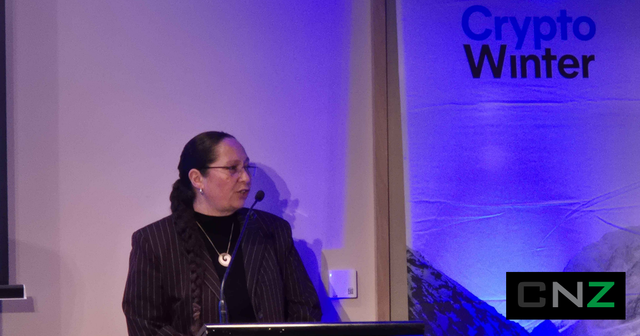
ACT unveils New Zealand's first crypto election policy at CryptoWinter26
New Zealand's first party crypto policy: ACT's plan covers tokenized assets, stablecoins, a 12-month tax rule, and banking access for fintechs.

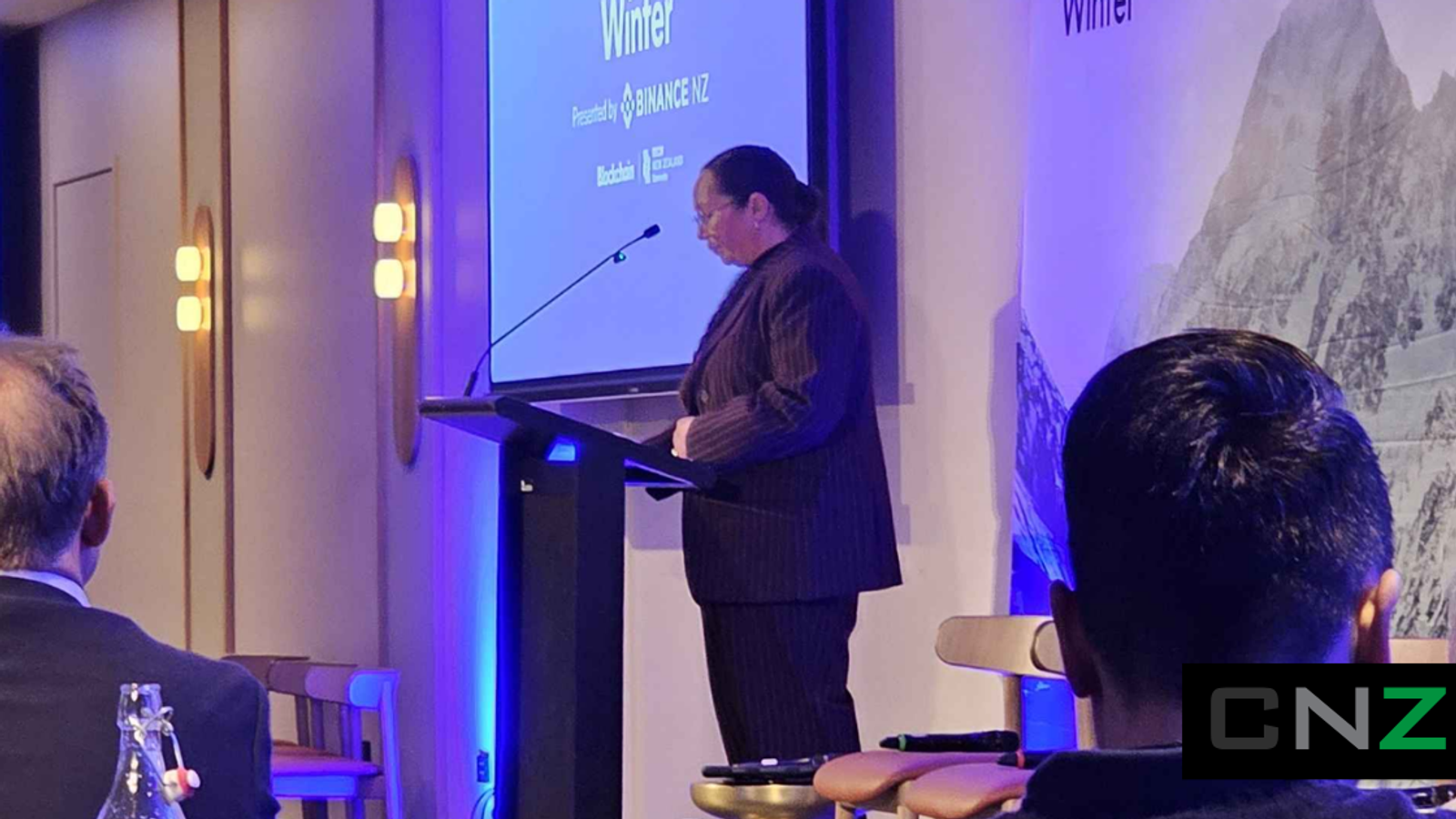
ACT deputy leader Nicole McKee used the stage at CryptoWinter26 on Thursday to unveil "Unlocking New Zealand's Digital Economy" - a six-point plan on tokenization, stablecoins, tax and banking access that ACT will take into this year's election, and which the party is framing as New Zealand's first dedicated crypto and digital assets policy from a political party.
McKee opened by acknowledging the room likely understood digital assets better than she did. "But I know enough to see the potential here for innovation, investment and economic growth," she said, "and to understand that government can either help create the conditions that are needed for innovation, or just get out of the way."
She framed the choice bluntly:
"ACT wants New Zealand to be an early and intelligent adopter rather than a reluctant follower."
"Uncertainty around tax and regulation, difficulty accessing banking services and outdated rules are holding our innovators back," she said.
McKee didn't shy away from the sector's reputation.
"New technologies arrive surrounded by a mixture of genuinely useful innovation, excessive optimism, bad ideas and outright fraud," she said - before reaching for a comparison she returned to later in the speech.
"The internet produced some extraordinary businesses and some spectacular failures. What mattered was not whether every dot-com company survived, but whether the underlying technology changed the economy."
Session moderator Brian Ventura, taking the stage straight after her, said it himself before he'd finished his introduction:
"My jaw is still on the floor after that announcement from Minister McKee."
The six points
- A 12-month bright-line tax rule. Gains on digital assets held longer than 12 months would not be taxed on disposal; sales within 12 months, and all professional trading or business activity, stay fully taxable. McKee said the current approach depends on "subjective assessments of why somebody originally acquired" an asset, which she called a source of prolonged uncertainty for ordinary investors.
- A low-value transaction exemption. Under current law, buying a coffee with crypto is technically a taxable disposal of property. ACT would consult on a per-transaction threshold and an annual cap to remove that compliance burden without opening a broader loophole. "That is a disproportionate amount of compliance for a transaction that may raise virtually no revenue," McKee said.
- Tokenised securities and real-world assets. ACT would legislate a clear legal and tax framework for tokenisation - covering what a token represents in law, how ownership is enforced, who's responsible for custody, and how transactions are taxed. McKee was careful to draw a line under the underlying asset itself: "The underlying asset does not somehow become cryptocurrency. A share is still a share, a farm is still a farm, and a bond is still a bond." "Tokenization is not a magic solution to New Zealand's capital market problems," she said. "But government should not prevent businesses using a potentially useful tool simply because the law has failed to keep pace."
- Stablecoins. "New Zealand is a small trading country located a very long way from many of our customers, our suppliers and our investors," McKee said. "That means the cost and speed of moving money across borders matters more to us than it might to a large country with an enormous domestic market." ACT would build a regulatory and tax framework for "qualifying payment stablecoins," with requirements around reserves, redemption, custody, governance, disclosure and financial crime obligations. She distinguished a stablecoin "backed by high quality liquid assets and redeemable at face value" from one that "simply labels itself as being stable."
- A financial innovation sandbox. "A recurring problem in heavily regulated industries is that the rules designed for large established institutions can become a barrier to the very competitors and innovators who might challenge them," McKee said. Smaller fintechs testing new products would get proportionate rules rather than the full compliance load carried by large institutions. "New Zealand produces smart and ambitious people," she said. "We should not make moving overseas the easiest way for them to test whether or not a new idea works."
- A banking access review. "We can create the clearest digital finance laws in the world," McKee said. "But they will not mean very much if a legitimate and properly regulated business cannot open or maintain a bank account to access the payment infrastructure." ACT would review whether current settings are "unnecessarily denying legitimate fintech and digital finance businesses access to essential financial infrastructure." This is the point with the most immediate bite in the room - Wednesday's bank-versus-crypto debate on the same stage had already surfaced banking access, not regulatory speed, as the sector's most-cited practical barrier, a point MinterEllisonRuddWatts partner and Blockchain Forum NZ chair Jeremy Muir made directly from the floor.
On this point specifically, McKee was explicit that access shouldn't be denied by category:
"Legitimate businesses should be assessed on what they actually do and how they manage those risks, rather than being rejected simply because their business involves blockchain, cryptocurrency or digital assets."
IRD figures cited alongside the policy put crypto usage in New Zealand at 355,000 people and $36 billion in recorded transactions.
View the full policy on Act's website here.
Why now
McKee tied the timing to a broader argument about where New Zealand sits globally - one that echoed comments made on the same stage a day earlier by Blockchain APAC chief executive Steve Vallas, who told CryptoWinter26 New Zealand "is not even in the conversation" internationally on digital assets policy.
"Governments overseas are beginning to build legal frameworks around these technologies rather than simply debating whether they should exist," McKee said.
"For New Zealand, the important question is whether we create an environment in which our businesses and entrepreneurs can participate in those developments, or whether we wait until everybody else has built the rules, attract the investment and develop the expertise, and then import the technology later."
"New Zealand will not become wealthier by trying to preserve yesterday's economy," she said.
"We become wealthier when people invest, they build businesses, they develop better technology, and find more efficient ways of doing things."
She closed with a rare admission for a minister on a conference stage: "I do not know exactly what digital finance will look like in 10 or 20 years' time. And I would be sceptical of any politician who would claim that they did. But what government can do is make New Zealand a place where an entrepreneur can get a clear answer, an investor can understand the tax rules, a legitimate business can access financial infrastructure, and new technology is judged according to what it actually does, rather than how unfamiliar it looks. And I look forward to your feedback, especially when we start the consultation process."
CryptoWinter26 continues at QT Queenstown. CNZ is reporting from Queenstown across both days of the conference.