New Zealand bans Polymarket
The New Zealand Department of Internal Affairs has deemed Polymarket & Kalshi illegal gambling platforms, with no plans to enforce with individual user penalties.


New Zealand's regulatory grip on gambling has extended into crypto, with the Department of Internal Affairs recent efforts to safeguard the TAB monopoly.
Yet, with individual users facing no direct penalties, questions arise about the ban’s real impact on Kiwis engaging with decentralized predictive markets.
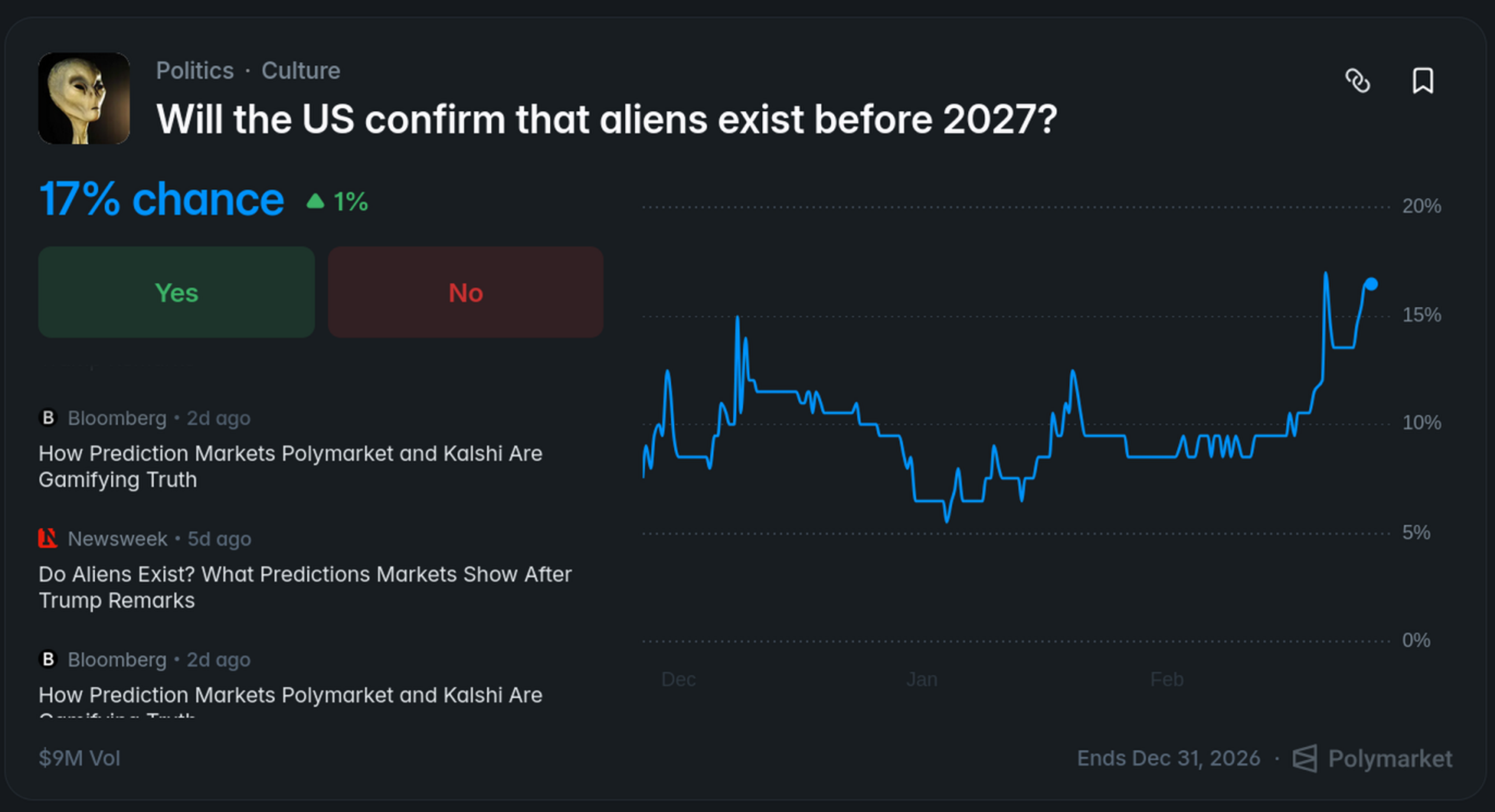
An active Polymarket wager on if aliens will be confirmed by 2026.
What is Polymarket?
Polymarket and Kalshi are decentralized platforms where users bet cryptocurrency on future events such as elections, war, sports, acquisitions, politics, markets, culture, and everything in-between.
Exclusively dealing in crypto and using smart contracts to enforce wagers, Polymarket has attracted notable attention, with global trade volumes on some wagers hitting billions.
Current notable global bets include wagers on:
- The return of Christ by the end of 2026 (~4% chance).
- if the US government will confirm aliens exist by the end of 2026 (~17% chance).
- if Russia and Ukraine will reach a ceasefire by the end of 2026 (~37% chance).
Predictive markets provide insight into likely outcomes of events, led by individuals committing real world assets.
Users can profit from locking in bets before shifts in perceived likelihood.
These platforms contrast traditional signals from insiders, mainstream media, academics, and the expert class, democratizing prediction narratives and putting real-world value behind outcomes.
Such platforms enable profits from information asymmetries, with documented cases of insider trading, from wagers created before decisions hit the market.
Users across the world increasingly refer to such markets as "truth machines".
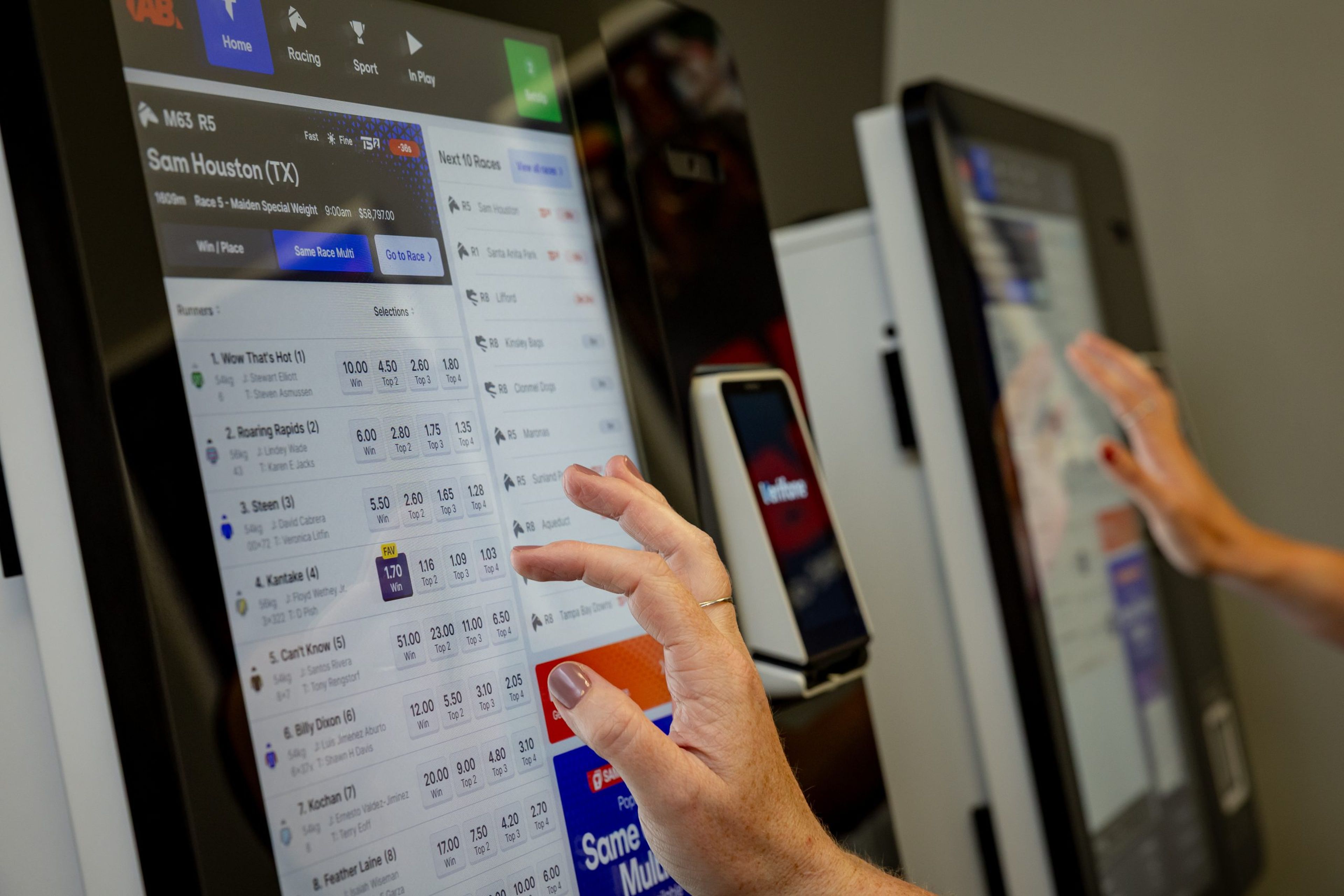
TAB's 2025 roll out of new digital betting terminals
TAB's Monopoly, the DIA, and the Illusion of Control
On 16 Feb, the New Zealand Department of Internal Affairs classified Polymarket and Kalshi as unauthorized gambling platforms under the Gambling Act 2003.
The DIA’s decision requires both to cease operations to New Zealand users.
DIA Director of Gambling Vicki Scott stated: “Their prediction market products meet the definition of gambling under New Zealand law... They need to withdraw from the New Zealand market.”
These moves build on June 2025 amendments to the Racing Industry Act that outlawed offshore betting sites such as Stake.com, Bet365, and Betfair from accepting wagers from within the country.
TAB NZ is the country's statutory betting institution - a not-for-profit entity directing proceeds primarily to racing codes - with day-to-day operations managed under a 25 year 50/50 partnership with the United Kingdom's Entain, including revenue-sharing arrangements.
The setup aimed to create a single regulated channel for gambling activities.
Community responses have been mixed, with many questioning the DIA's reach over decentralized markets.
“Funny how if the Govt can’t clip the ticket it’s ‘illegal’,” one New Zealander said.
In NZ, gambling has been heavily regulated for over a century, with strict controls to limit growth, prevent harm, and direct profits to specific purposes.
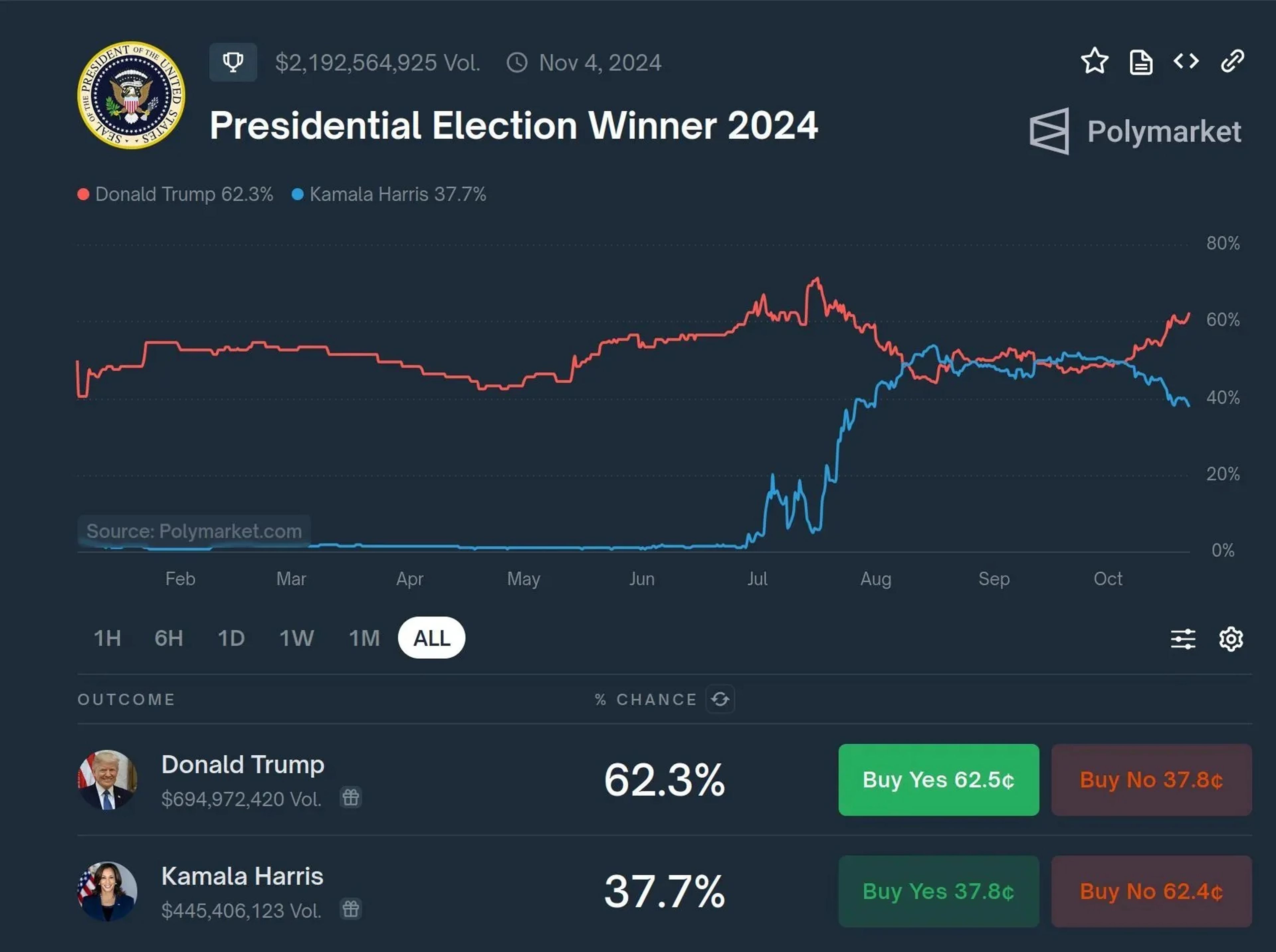
A screenshot of the final stretch of the 2024 US presidential race
The End, or Just the Beginning of Market-Based Polling?
Prediction markets have emerged globally as an alternative to traditional polling, where users commit real capital to crowd-source probabilities for future events.
While global volumes are dominated by major events like the 2024 US presidential election (Polymarket alone saw US$3.7 billion in trades), these platforms increasinly host New Zealand specific markets and outcomes.
In recent months, Polymarket has featured active markets on Reserve Bank of New Zealand Official Cash Rate (OCR) decisions.
Research from institutions like the University of Iowa shows prediction markets frequently outperform conventional polls in terms of accuracy, as they are driven by financial incentives that reduce bias.
Mainstream media organizations in the US, such as CNN, increasingly rely on these polls in their broadcasts, hedging against lost trust from previous polls.
Perspectives among Kiwis remain split.
Supporters highlight how these markets offer a "truth machine" through real-money commitments, potentially challenging mainstream narratives on politics and economics.
One local observer commented: "Prediction markets have become increasingly accurate in such things as election polls, as $ is on the line. But that would take over from mainstream media."
“Polymarket is illegal in NZ? Good luck policing that.” another added.
"Where is the democratic input on these decisions" said another.
Critics point to risks, including insider advantages - evident in global cases where non-public information enabled profits - and broader gambling harms that prompted the DIA's classification.
Tools like OpenClaw have drawn users to analyse discrepancies and profit from rapid decisions using artificial intelligence and rapid response.
"All I see it doing is slowing adoption. There's not an effective way they can block wallets unless they require KYC. They aren’t incentivised to actually block kiwis so it’ll be a bit of theatre and nothing more imo," one local user said.
Another added: "They'll ban anything that threatens the Entain monopoly."
The DIA has confirmed operator enforcement and intended self-withdraw of the platforms from the country, with fines of up to 500k NZD for non-compliance.
The DIA has no intention to prosecute individual users.
Whether the measures prove effective remains to be seen, particularly as Kiwis retain access to global decentralized systems ahead of the 2026 election.