
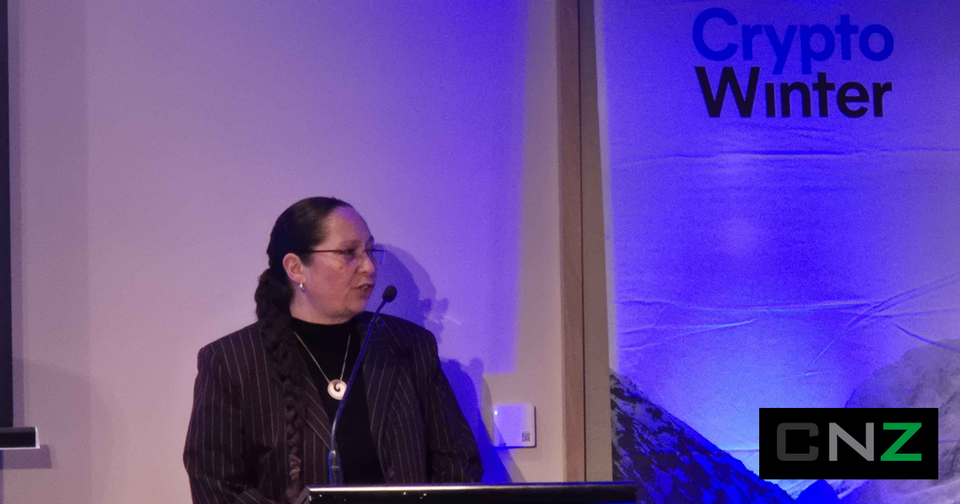
QUEENSTOWN - CryptoWinter26 closed with New Zealand's first crypto policy ever, a major industry announcement that never came, and a closed-door policy summit where media were not invited.
Nine months of lobbying, and Bitcoin didn't get exclusivity
On 27 August 2026, the second day of CryptoWinter26, ACT used its afternoon keynote slot to become the first political party in New Zealand to launch a dedicated crypto election policy.
The policy was nearly a year in the making, built on lobbying from two camps: Blockchain Forum NZ's broad, cross-party groundwork, and the Bitcoin Policy Institute NZ's push for something far more specific.
Blockchain Forum New Zealand had been laying that groundwork since 2019, when it first presented to a parliamentary select committee - work that formalized in October 2025 into the Parliamentary Digital Assets Working Group, a cross-party initiative that pulled in 15 MPs, including two ministers, alongside the FMA and industry leaders.
"There's definitely an appetite inside Parliament for digital assets," executive director Trevor Topfer said at the time, calling the bipartisan support "clear."
BPINZ's ask was narrower still: Bitcoin only.
On 12 November 2025, the group stood in front of 40 invited guests - including Associate Justice Minister Nicole McKee, National's Joseph Mooney, and ACT's Cameron Luxton - and asked for a $1,000 de minimis tax exemption to reduce friction in Bitcoin payments specifically.
Chair Kevin Whitmore was explicit about the distinction at the time: the paper was titled Bitcoin as Money.
Nine months later, ACT delivered the exemption BPINZ asked for - just not the exclusivity attached to it.
The word "Bitcoin" doesn't appear in the policy once.
The policy's low-value purchase rule applies to "digital assets" broadly, covering Bitcoin the same way it covers everything BPINZ's paper spent nearly ten months insisting Bitcoin wasn't.
"New technology is changing how businesses raise capital, how people invest, and how money moves around the world," McKee said.
"ACT will cut red tape, set clear rules, and open up investment so Kiwis can raise capital, pay and get paid more easily, and take part in the technologies shaping the future - while keeping strong consumer and financial safeguards."
ACT MP Cameron Luxton framed it as bigger than crypto specifically:
"We will align digital finance policy with a bigger goal, getting capital flowing to good ideas and helping entrepreneurs build globally competitive businesses from New Zealand."
ACT wasn't campaigning to an empty room, either.
Opportunity list candidate Bianca Beebe attended across both days, and party leader Qiulae Wong separately spoke at NZ Crypto Con - a sign interest in digital assets is starting to spread past the one party that's turned it into policy.
Asked for her take on the conference, Beebe said:
"On my candidate profile, I say that New Zealand is the perfect place to build a sovereign, solarpunk future. CryptoWinter has certainly reaffirmed that opinion. Home-grown initiatives we discussed like Toha Network, Te Kāhui Raraunga, and so many others are leading a tech ecosystem that will drive us to a better future. Consider Opportunity a partner in building it."
The announcement that didn't come
A second “major industry announcement” was billed for the closing session of the day - teased days out as "be there on the day to find out what it is."
CNZ has learned the announcement was pulled at the last minute, with timing considered too early for a public reveal. It related to practical next steps for the industry and Blockchain Forum New Zealand is expected to say more soon.
What filled the slot instead was a recap of Project Acacia, the Reserve Bank of Australia's real-money pilot testing tokenised settlement across central bank reserves, bank deposits and stablecoins, followed by an open, non-committal panel discussion.
Blockchain APAC chief executive Steve Vallas gave the panel's sharpest line - a blunt reality check on how far behind New Zealand actually is:
"I don't see the chips on any table."
The rest of the day
Four other conversations rounded out the day: money, identity, funding, and rules.
"Stablecoin" was said 118 times across the two days, against 19 for "Bitcoin."
AUDD's Rachael Jones opened the stablecoin breakfast bluntly: New Zealand is "genuinely at a crossroads," facing "a slow decline in our relative prosperity".
Global stablecoin settlement hit roughly US$28 trillion last year, almost all of it in US dollars - "that is the world New Zealand is deciding how or whether to participate in."
Actual usage of the country's own stablecoin tells a similarly small story:
NZDD has just 608 holders on-chain, per Etherscan.
Digital Identity NZ's Andy Higgs opened with the story of his last venture.
"I didn't think I'd be invited back after last year," he told the room.
"James asked me what's happened to your Futureverse, the Root Network and the NFTs - you guys are just pump and dump specialists. I had no idea we were about to become the biggest tech flame-out in New Zealand history, which the Herald quoted us on over the weekend. So I'm back. I'm paying my debt to society - I'm the trust guy now."
He argued the conference had misjudged its own subject in the process:
"You thought you were coming to a cryptocurrency conference. We're actually at a cryptographic identity conference."
On agents transacting without anyone accountable for them:
"We're already talking about robots ripping us off - and they already have."
Origins Next's Laszlo Peter zeroed in on New Zealand's dead money.
Construction firms have 5 to 10 per cent of every project's value tied up as retention money for two years at a time - "literally dead money," he called it, sitting idle instead of funding anything.
Fonterra pays farmers "almost 180 days later than it is necessary," and Zespri growers wait "almost half a year" to get paid.
The financial advice panel produced the sharpest piece of regulatory absurdity all week.
Asked what turns a crypto conversation into regulated financial advice, Kōura Wealth's Rupert Carlyon didn't hesitate:
"Nothing - because digital assets are not a financial product."
The FMA's Alan Crofts didn't dispute what that creates - advice is fine on a Bitcoin ETF listed on the NZX, but not on the Bitcoin sitting underneath it in someone's own wallet, where the real risk actually lives - but wouldn't set a date to fix it:
"I would be amazed if it doesn't happen... we are soon starting to roll out some clarity."
The room that stayed closed
The following day, government and industry met behind closed doors for a Policy Summit under Chatham House Rule - no attribution, no reporting of who said what, and no media in the room.
Whatever was discussed stays there for now.
CryptoWinter26 has concluded at QT Queenstown.