
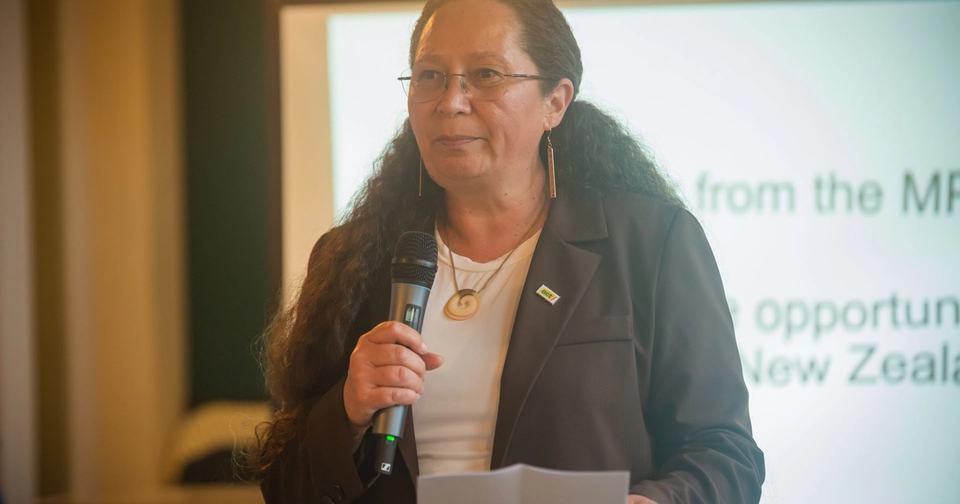
WELLINGTON - In a move to position Bitcoin as everyday money rather than a speculative asset, the Bitcoin Policy Institute New Zealand (BPINZ) has proposed an exemption for transactions under $1,000.
The paper, launched on November 12, argues that current tax rules create an "accounting nightmare" for payments, stifling adoption and innovation.
With MPs in attendance and the Bitcoin community's voice growing stronger through bipartisan engagements, this could mark a turning point for digital currency in New Zealand.

The invite-only event drew 40 guests, including reps from government departments, businesses and other stakeholders.
Treating Bitcoin as Money
The policy paper, titled Bitcoin as Money: De minimis tax exemption for Bitcoin payments under NZD $1000, calls for exempting all small Bitcoin transactions from income tax when their primary purpose is consumption or practical use, as opposed to speculation.
Under current Inland Revenue Department (IRD) rules, every Bitcoin payment used to purchase goods or services is treated as a taxable disposal of an asset, requiring users to pay capital gains or claim losses.
The proposed $1,000 threshold would apply to all taxpayers except professional traders or exchanges, with anti-fraud measures preventing transaction splitting.
Drawing on international precedents, the paper highlights how the United States is advancing bipartisan bills for exemptions up to USD $600; Germany offers tax-free gains under €600 annually, and Portugal largely exempts individual crypto gains unless deemed business-related.
In New Zealand, the exemption could help alleviate the approximately $1 billion annual burden on businesses from traditional card fees - primarily Visa and Mastercard merchant charges - according to a July 2025 Commerce Commission report, while boosting fintech innovation and attracting 'Bitcoin tourists' to circular economies like Queenstown's Bitcoin Basin project, where over 30 merchants already accept Bitcoin
Nationwide, over 80 retailers are already using Bitcoin's Lightning network, with 431 merchants accepting crypto as payment according to Pay it Now - PIN.

BPINZ chairperson Kevin Whitmore, previously with Callaghan Innovation
Kevin Whitmore, Chair of BPINZ, emphasized the practical benefits.
"It is not policy yet, but we think that a de minimis exemption will remove the accounting nightmare that currently comes with every small Bitcoin payment. If buying a coffee no longer requires capital-gains calculations, everyday use becomes realistic. That means simpler compliance, lower payment costs, and a clearer incentive for small businesses and consumers to use Bitcoin as money."
A survey by Cryptocurrency Tax NZ - a specialized accountancy firm - cited in the paper revealed that over 70% of crypto users feel non-compliant due to tracking complexities for gains and losses on everyday transactions, underscoring the urgent need for reform.

A Bitcoin Lightning card being used to make a payment.
MPs Attend, But Silence in the House
The launch event hosted notable NZ politicians; Hon Nicole McKee (Minister for Courts and Associate Minister of Justice), Joseph Mooney (MP for Southland), Greg Fleming (MP for Maungakiekie), and ACT List MP Cameron Luxton.
Their presence highlights a strengthening Bitcoin voice in New Zealand politics and early signs of the NZ Bitcoin vote, building on earlier engagements of 2025’s Bitcoin and blockchain events at the beehive.
Other politicians showing support include National's Minister for Commerce and Consumer Affairs Andrew Bayly, who in April 2024 advocated for crypto regulations that 'support the growth of the industry' to prevent New Zealand from missing out on digital finance opportunities.
Whitmore noted the event's objective: "The goal ... was to celebrate our institute launching, but also to demonstrate how Bitcoin is money and can be used for payments."
He added, "It is important that this conversation about Bitcoin involves key stakeholders from across government and the private sector, and that it is bipartisan in its approach. Bitcoin is better money for everyone."
Despite this momentum, the proposal has not yet been formally tabled in Parliament. Crafted for policymakers, merchants, taxpayers, and innovators, it invites feedback to refine details and build support.
BPINZ's next steps include "working with ministers, MPs, and officials to build bipartisan support and refine the policy details," with the aim of progressing the exemption toward legislation while engaging industry and the public.
As of November 24, 2025, no New Zealand political party has a dedicated Bitcoin or cryptocurrency policy outlined in their official platforms or manifestos.
Interestingly, a search of New Zealand Parliament's Hansard debates transcripts shows 7 mentions of Bitcoin, dating back to 2014 when Sir John Key first uttered it in the house, critiquing on Green Party’s economic policies:
“It is quite one thing when the Green Party wants to print money, but David Cunliffe has actually taken that to a whole new level. You see, he has gone right past the printing press, right past bitcoin, and he has now gone into imaginary or make-believe money. It is fantastic stuff”.
While committee reports mention Bitcoin in passing, the absence from floor debates suggests Bitcoin remains on the fringes even as advocacy intensifies.

New Zealand was a pioneer in digital payments with the introduction of EFTPOS in the 1980s
Taxation, Risk, and the Big Picture
Dr. Stephen Wingreen, Associate Professor at the University of Canterbury's Department of Accounting and Information Systems, provided context on the behavioral impacts of taxation:
"Taxation, no matter what it is that is being taxed, has a punitive effect on behavior; more taxes will result in less of the target behavior, fewer taxes will result in more.
“In the case of Bitcoin transactions, a de-minimis tax will encourage more merchants to adopt, and more Bitcoin owners to use Bitcoin as a payment method”, he added.
“If Bitcoin is to be used as money, then it is essential that there be no barriers for merchants to accept, or customers to offer Bitcoin as payment, since that is by definition a characteristic of money."
On government caution, Dr. Wingreen - who researches emerging technologies, blockchain, and cryptocurrencies - speculated: "In the case of the NZ government and Bitcoin adoption, it is likely that, like all governments, NZ is cautious because they don't understand Bitcoin well enough to assess its risks to national sovereignty, in this case, sovereignty over the economy in particular.
“What is it about Bitcoin that governments fear? We can speculate about this in the absence of any firm statement from the NZ govt itself: anonymity of transactions, lack of control or enforcement over the payment mechanisms, tax collections on anonymous transactions outside their ability to control or enforce".