How to Buy Cryptocurrency in New Zealand


Pick a platform

Featured Platforms
Pay It Now
NZ crypto retailer

Pay It Now is a New Zealand-built crypto retailer and digital wallet app. You pay in NZD by bank transfer, card, or POLi, and crypto is delivered to your PIN app wallet. From there you can withdraw to any external wallet you control at any time. No exchange account, no obligation to leave funds on the platform. Simple, clean, and a solid starting point for most Kiwis buying crypto for the first time.
Binance NZ
Deep global markets
Binance is the world's largest crypto exchange by volume, with over 1,500 trading pairs and consistently low fees. Onboarding is more involved than with a retailer, and it's more commonly used by people who've already made a first purchase elsewhere.
BlackBull Markets
CFDs - advanced users only
BlackBull Markets is an FMA-regulated NZ broker offering crypto price exposure through CFDs and margin, rather than coins delivered to a personal wallet. It's generally more relevant to experienced traders than first-time buyers - Pay It Now or Binance are more typical starting points for a first purchase.
NZ P2P Crypto Marketplace
Community-run peer-to-peer crypto trading
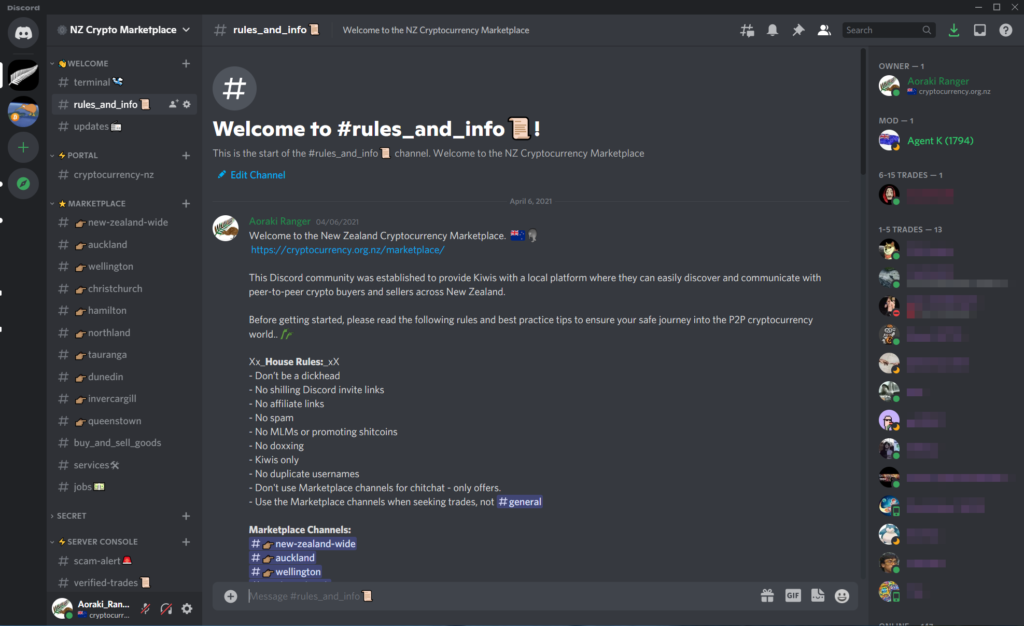
The NZ P2P Crypto Marketplace is a community-run Discord server where New Zealanders can find and connect with person-to-person crypto buyers and sellers. It grew out of the Buy & Sell Cryptocurrency NZ Facebook group in April 2021, moving to Discord for better functionality and localisation. Verifying every trade independently, and defaulting to treating new contacts with caution, is standard practice here.
Ways to Get Cryptocurrency in NZ
Crypto Retailers
Retailers are the simplest way to buy crypto in NZ. You pay in NZD, the crypto goes directly to your personal wallet - no account balance sitting on a platform, no custody risk. They source from multiple exchanges to stay competitive, so rates are generally fair. Fees typically sit between 0.5-2.5%. The tradeoff for convenience is a slightly higher spread than trading on an exchange yourself.
Pay It NowCrypto Exchanges
Exchanges give you access to live markets - you're trading directly with other buyers and sellers in real time, usually at tighter spreads. The catch is custody. To trade on an exchange, your funds sit on their platform. That's fine for active trading, but it's not where you want to store crypto long term. FTX is a widely cited example of what that risk looks like at its worst. Many holders move funds to their own wallet after buying, rather than leaving them on the exchange.
View all exchanges guideP2P Trading
Buying and selling crypto directly between people, with no platform in the middle. No identity verification, no exchange account required - just two parties agreeing on a price and transacting directly. It's a common way to trade in New Zealand, though scams are also common - read the basics before your first trade.
Crypto Mining
Mining is how some Kiwis acquire crypto without buying it outright. You contribute computing power to a blockchain network and earn newly minted coins in return. It's not passive - there are real hardware and electricity costs to weigh up, and NZ power prices matter here. If you're considering it, our mining guide covers hardware, power costs, and where to start in NZ.
NZ Crypto Mining GuideWorking for Crypto
An increasing number of jobs - local and international - pay in crypto, either as salary or for freelance work. Stablecoins make cross-border payment straightforward, no foreign bank account needed. If you're looking, Seek, LinkedIn, and the CNZ Discord are reasonable places to start.
What to Buy
Bitcoin and Ethereum are where most Kiwis start. Beyond that it depends on your goals and research.
Not financial advice. Do your own research.
Before You Buy
Store your crypto in your own wallet
If you don't control the private keys, you don't control the underlying funds - they remain with the platform until withdrawn. Exchanges get hacked, platforms go under.
NZ Crypto Wallets GuideUse a hardware wallet for anything significant
Software wallets are fine to start. Once you're holding real value, a hardware wallet is the most secure option available to everyday users.
Hardware Wallet GuideAlways send a test transaction first
Before moving any significant amount, send a small test and confirm it arrives. Crypto transactions are irreversible - there's no support line to call.
Never type a wallet address manually
Always copy-paste. Always check the first and last few characters after pasting. Clipboard malware that silently swaps addresses is real and common.
Back up your seed phrase offline
Write it down. Store it somewhere secure and private. Never photograph it, never save it digitally. Lose your seed phrase and your funds are permanently unrecoverable.
Wallet Security GuideVerify you're on the correct website
Phishing sites impersonating NZ crypto platforms are common. Bookmark the real URLs and always double check before logging in or sending funds.
CNZ Scams GuideNever invest more than you can afford to lose
Not a disclaimer - practical advice. Crypto is volatile. Position yourself so that a bad outcome doesn't break you.
Mentally write off what you put in
Separate from the above. If losing it would materially affect your life, you've put in too much.
Nobody should be telling you what to buy
Not influencers, not mates, not CNZ. Anyone with strong conviction about what you specifically should buy has an angle. Do your own research.
Don't trade on price action
Buying because it's pumping or panic selling when it drops is how most people lose money. Have a plan before you buy.
Keep your holdings private
You wouldn't tell strangers you have gold at home. How much crypto you hold is nobody's business.
Understand your tax obligations
IRD treats crypto as property - most disposals are taxable events. It catches a lot of Kiwis off guard. Know where you stand before you start trading.
IRD Crypto Tax GuideFrequently Asked Questions
Yes. New Zealanders can buy crypto through local and international platforms. The main options are covered above - Pay It Now, Binance, and the NZ P2P Marketplace.
From zero to crypto in hand, most people can get it done in a day. Account verification is typically the slowest part. Once verified, orders usually settle within minutes.
On any regulated NZ platform, yes. NZ AML law requires identity verification before you can buy or sell. P2P and decentralised exchanges are the main alternatives if KYC is a concern.
That's your call to make, not ours. Bitcoin and Ethereum are where most people start. Beyond that, do your own research. Our coin guides → cover the major assets worth understanding.
Yes - all platforms featured on this page support selling. Crypto markets run 24/7, 365 days a year.
IRD treats crypto as property. Most disposals are taxable events. If you're actively trading, get across your obligations early. IRD guidance →