
What is the Lightning Network?
The Bitcoin Lightning Network is a revolutionary "layer 2" payment protocol built on top of the Bitcoin blockchain that enables instant, low-cost Bitcoin transactions. Think of it as a network of express lanes built above the main Bitcoin highway, allowing users to bypass congestion and transaction fees while maintaining the security and decentralization that makes Bitcoin valuable.
Launched in 2018, the Lightning Network has grown exponentially, with over 53,000 payment channels and billions of dollars in capacity as of 2024. For New Zealand Bitcoin users, this technology represents a paradigm shift from viewing Bitcoin purely as a store of value to using it as a practical medium of exchange for everyday transactions.
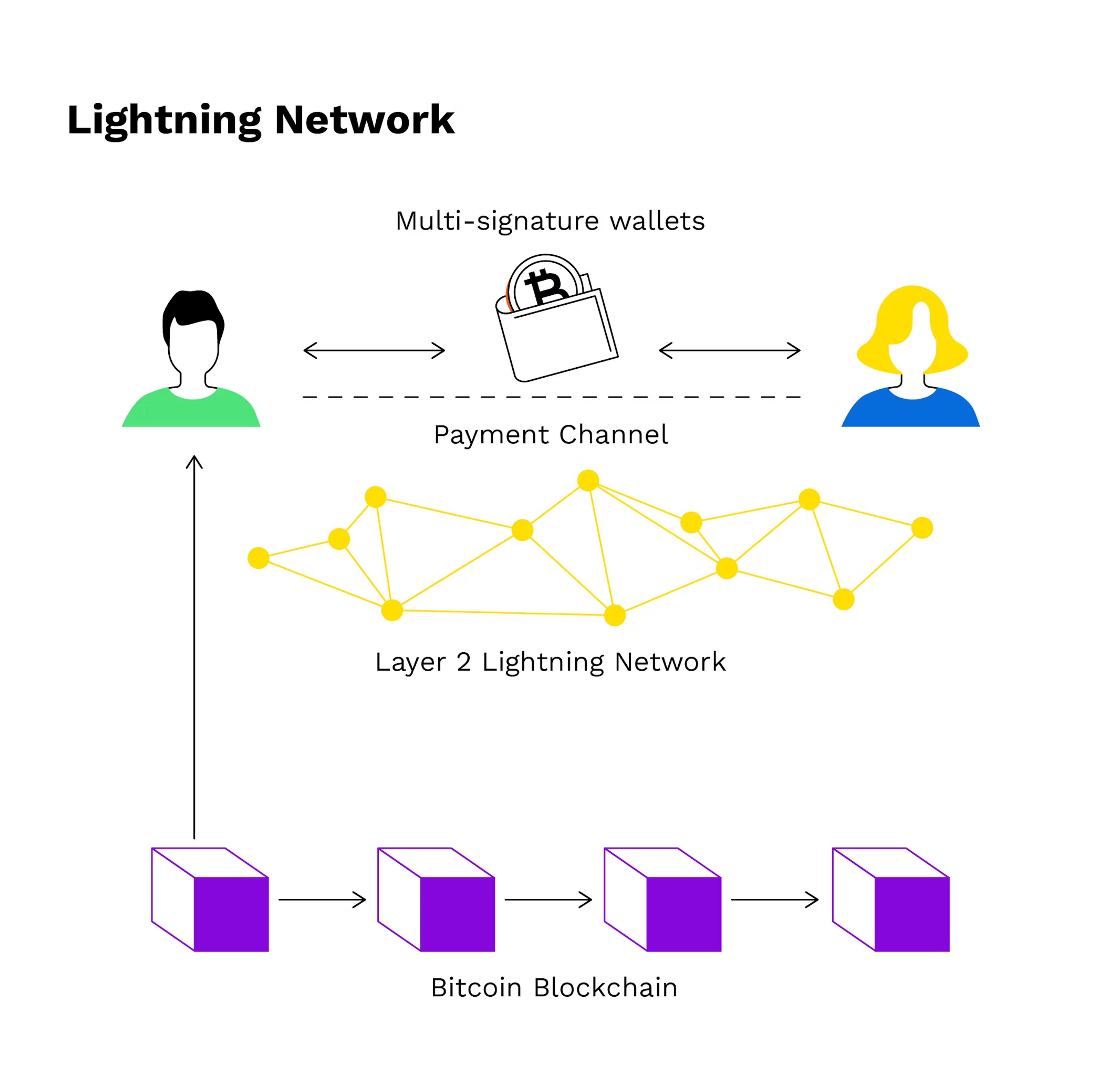
The Lightning Network operates through a sophisticated system of payment channels that allow two parties to transact with each other an unlimited number of times without broadcasting every transaction to the Bitcoin blockchain. These channels can be interconnected, creating a network effect where payments can be routed through multiple participants to reach any destination on the network.
Why Bitcoin Needs the Lightning Network
Bitcoin's base layer faces what's known as the "blockchain trilemma" - the challenge of achieving decentralization, security, and scalability simultaneously. The Bitcoin network can process approximately 7 transactions per second, compared to Visa's capacity of 24,000 transactions per second. This limitation makes Bitcoin impractical for small, frequent transactions like buying coffee or paying for parking.
The Lightning Network solves this scaling challenge without compromising Bitcoin's core principles. Rather than increasing block sizes or reducing security (approaches that led to contentious forks like Bitcoin Cash), the Lightning Network moves the majority of transaction activity off-chain while maintaining the security guarantees of the underlying Bitcoin network.
For New Zealand users, this means Bitcoin can finally compete with traditional payment methods for everyday use. Transaction fees on the Lightning Network typically cost fractions of a cent, making micropayments economically viable. Settlement times are measured in seconds rather than the 10-60 minutes required for on-chain Bitcoin confirmations.
How the Lightning Network Works
Understanding the Lightning Network requires grasping three fundamental concepts: payment channels, routing, and Hashed Timelock Contracts (HTLCs).
Payment Channels
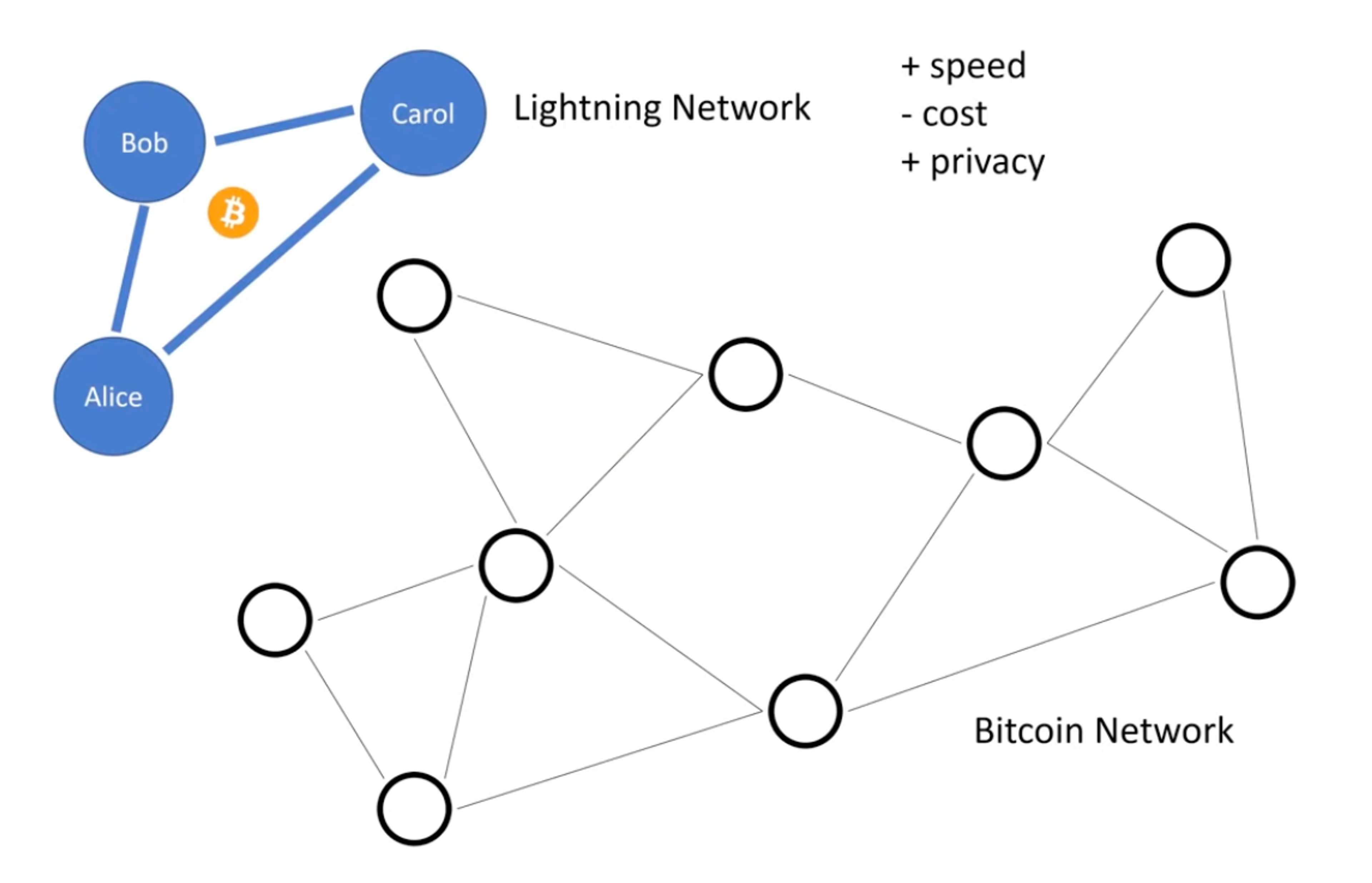
A payment channel is essentially a private ledger between two parties. To open a channel, both participants contribute Bitcoin to a 2-of-2 multisignature address on the Bitcoin blockchain. This initial transaction, called the "funding transaction," determines the channel's capacity.Once the channel is open, the participants can exchange Bitcoin between themselves instantly and without fees by updating the channel's balance. These transactions are real Bitcoin transactions, but they're not broadcast to the blockchain immediately. Instead, both parties hold signed transactions that represent the current state of the channel, which can be broadcast at any time to settle the final balances on-chain.
Network Routing
The true power of the Lightning Network emerges when individual payment channels connect to form a network. If Alice wants to pay Charlie but doesn't have a direct channel with him, she can route the payment through Bob, who has channels with both Alice and Charlie. The network automatically finds the most efficient path for payments, often routing through multiple intermediate nodes.This routing capability means users don't need direct channels with everyone they want to pay. A well-connected Lightning wallet can reach virtually any other Lightning user through the network's routing algorithms.
Hashed Timelock Contracts (HTLCs)
HTLCs ensure that routed payments are trustless and secure. When Alice wants to pay Charlie through Bob, she doesn't need to trust Bob not to steal the funds. Instead, the payment is locked with a cryptographic hash that only Charlie can unlock with a secret preimage. If Charlie doesn't claim the payment within a specified timeframe, the funds automatically return to Alice.This mechanism ensures that either the payment reaches its intended destination or the sender gets their money back, eliminating counterparty risk in multi-hop payments.
Lightning Network Privacy Benefits
The Lightning Network offers significant privacy improvements over on-chain Bitcoin transactions, though it's important to understand both the benefits and limitations.
Privacy Advantages
Onion Routing: The Lightning Network uses onion routing, similar to the Tor network, to obscure payment paths. Each routing node only knows the previous and next hop in the payment route, not the original sender or final recipient. Payment details are encrypted in layers, with each node only able to decrypt its own layer.
Off-Chain Transactions: Since Lightning payments don't appear on the public Bitcoin blockchain, they're not subject to the same level of blockchain analysis that can de-anonymize on-chain transactions. This provides a significant privacy improvement for everyday Bitcoin usage.
Amount Privacy: Routing nodes can see that a payment is passing through their channel, but cannot determine the payment amount, as this information is encrypted within the onion packet.
Privacy Limitations
Channel Graph Visibility: The Lightning Network's channel graph is public information. While payment details remain private, the existence and capacity of channels are visible to anyone monitoring the network. This metadata can potentially be used to infer information about user behavior.
Endpoint Analysis: The opening and closing of Lightning channels require on-chain Bitcoin transactions, which are public. Sophisticated adversaries might correlate these transactions with off-chain Lightning activity to reduce privacy.
Routing Node Surveillance: A well-funded adversary operating multiple routing nodes could potentially correlate timing and routing information to de-anonymize payments, though this would require significant resources and network presence.
Non-Custodial vs Custodial Lightning Wallets
The choice between custodial and non-custodial Lightning wallets represents a fundamental decision about control, security, and responsibility. This choice is particularly important given the core Bitcoin principle: "Not your keys, not your coins."
Best Non-Custodial Lightning Wallets for New Zealand
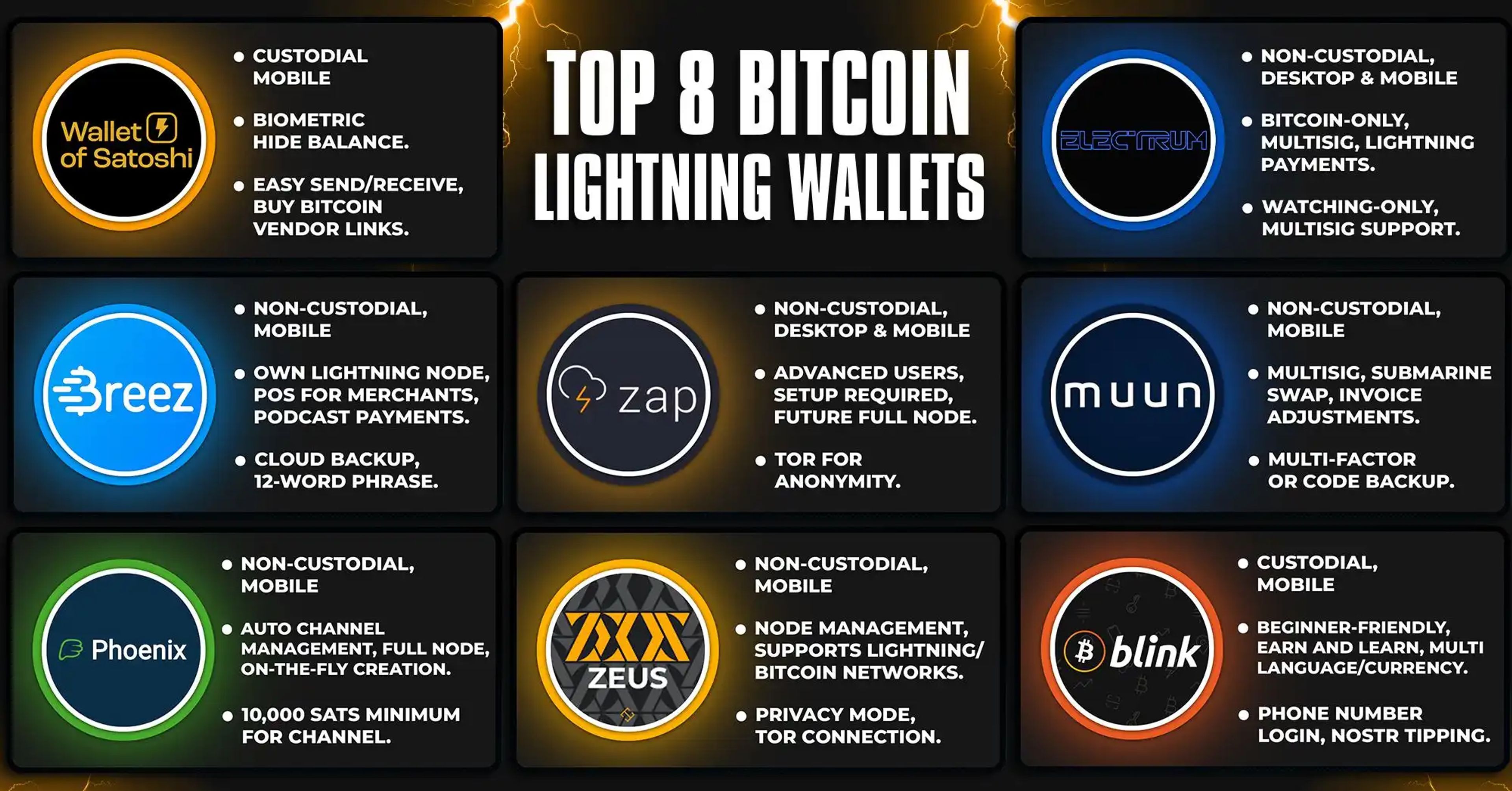
Based on extensive testing and community feedback, these non-custodial Lightning wallets offer the best combination of security, usability, and features for New Zealand users:
Breez Wallet
Best for: Beginners seeking a non-custodial solution
Breez offers an excellent balance of user-friendliness and self-custody. The wallet automatically manages Lightning channels through their Lightning Service Provider (LSP) model, which means users don't need to worry about channel liquidity or routing while maintaining control of their private keys.
Key Features:
- Automatic channel management
- Submarine swaps for on-chain interoperability
- Built-in point-of-sale functionality
- Open-source code•Backup and recovery through seed phrases
Phoenix Wallet
Best for: Users wanting automatic channel management
Developed by ACINQ, Phoenix provides a seamless Lightning experience with automatic channel creation and management. The wallet uses a single channel with ACINQ's node, simplifying the user experience while maintaining non-custodial control.
Key Features:
- Single-channel architecture
- Automatic channel creation
- Splice-in and splice-out functionality
- Excellent mobile experience
- Transparent fee structure
Blue Wallet
Best for: Users needing both Lightning and on-chain functionality
Blue Wallet offers a comprehensive Bitcoin wallet experience, supporting both Lightning and on-chain transactions in a single application. It's particularly useful for users who want to manage both types of Bitcoin transactions from one interface.
Key Features:
- Dual Lightning and on-chain support
- Multiple wallet types•Watch-only wallet functionality
- Hardware wallet integration
- Extensive customization options
Zeus
Best for: Advanced users with their own Lightning node
Zeus is designed for users who run their own Lightning node and want mobile access to their node's functionality. It offers the highest level of sovereignty and privacy but requires technical knowledge to set up and maintain.
Key Features:
- Connect to your own Lightning node
- Full node functionality on mobile
- Advanced channel management
- Multiple node implementations supported
- Complete transaction privacy

Using Lightning Pay NZ for Bitcoin Purchases
For New Zealand users, Lightning Pay NZ represents one of the most seamless ways to acquire Bitcoin and immediately use it on the Lightning Network. As a Bitcoin-only exchange with deep Lightning integration, Lightning Pay NZ eliminates many of the friction points that traditionally exist between buying Bitcoin and using it for payments.
Lightning Pay NZ allows users to purchase Bitcoin and withdraw it directly to their Lightning wallet, bypassing the need for on-chain transactions and their associated fees and confirmation times. This integration makes it possible to buy Bitcoin and spend it on the Lightning Network within minutes.
The service is particularly valuable for users who want to use Bitcoin for regular payments rather than just holding it as an investment. By enabling direct Lightning withdrawals, Lightning Pay NZ supports the vision of Bitcoin as a medium of exchange rather than just a store of value.
For a comprehensive review of Lightning Pay NZ's features, fees, and setup process, see our detailed Lightning Pay NZ review, which covers everything New Zealand users need to know about this innovative service.
Advanced Lightning Network Usage
As you become more comfortable with Lightning, several advanced techniques can improve your privacy, reduce costs, and increase your sovereignty over your Bitcoin.
Running Your Own Lightning Node
Operating your own Lightning node provides the highest level of privacy and control. Popular node implementations for home users include:
Umbrel: A user-friendly node solution that runs on a Raspberry Pi or dedicated hardware. Umbrel provides a web interface for managing your node and includes a built-in app store for Lightning applications.
RaspiBlitz: A DIY Lightning node solution focused on education and customization. RaspiBlitz offers more configuration options but requires more technical knowledge.myNode: A premium node solution offering both community and premium versions with extensive features and support.
Channel Management Strategies
Effective channel management can significantly improve your Lightning experience:
Inbound Liquidity: To receive Lightning payments, you need inbound liquidity. This can be obtained by spending Bitcoin through Lightning, using submarine swaps, or purchasing inbound liquidity from services like Lightning Labs Pool.
Channel Balancing: Keeping your channels balanced (roughly 50% local, 50% remote balance) maximizes your ability to both send and receive payments.Fee Management: Setting appropriate channel fees helps optimize routing revenue while ensuring your channels remain attractive to the network.
Privacy Enhancement Techniques
Several techniques can further improve your Lightning privacy:Channel Mixing: Opening and closing channels strategically can help break transaction linkability.Tor Integration: Many Lightning wallets support Tor for additional network-level privacy.Multiple Wallets: Using different Lightning wallets for different purposes can help compartmentalize your financial activity.
Conclusion
The Bitcoin Lightning Network represents a fundamental breakthrough in cryptocurrency technology, enabling Bitcoin to fulfill its original vision as peer-to-peer electronic cash. For New Zealand users, Lightning offers a practical way to use Bitcoin for everyday transactions while maintaining the security and decentralization that makes Bitcoin valuable.
By choosing non-custodial wallets and following security best practices, users can participate in this financial revolution while staying true to Bitcoin's core principles of financial sovereignty and privacy. The integration of services like Lightning Pay NZ makes it easier than ever for Kiwis to acquire and use Bitcoin on the Lightning Network.
As the technology continues to mature and adoption grows, the Lightning Network will likely become an increasingly important part of New Zealand's financial infrastructure. Early adopters who learn to use Lightning effectively today will be well-positioned to benefit from this transformation.
The journey from traditional banking to Bitcoin to Lightning represents a progression toward greater financial freedom and privacy. By understanding and using the Lightning Network, New Zealand Bitcoin users can participate in building a more open and inclusive financial system.
Stay Humble and Stack Sats...